Stellantis Unleashes Bold Product Expansion for Ram & Chrysler by 2030
By Adam Chehayeb
Stellantis is set to dramatically expand Ram and Chrysler's North American lineups, introducing 11 new nameplates and diversified powertrains.
Stellantis's Ambitious North American Product Expansion: A New Era for Ram and Chrysler
For years, Ram and Chrysler have operated with remarkably narrow product portfolios in North America. Ram has carved its niche primarily in full-size pickups and commercial vans, while Chrysler has largely anchored its presence on the versatile Pacifica family. This focused approach left significant segments, such as compact pickups, midsize trucks, and mainstream crossovers, open to rival manufacturers. However, this strategic landscape is on the cusp of a profound transformation, as Stellantis embarks on one of its most significant North American product expansions in recent memory.
During its Investor Day 2026, Stellantis unveiled comprehensive plans to refresh its North American showroom before 2030. This ambitious roadmap includes the introduction of 11 new nameplates and 12 substantially updated vehicles. Ram is poised to enter the compact-pickup, midsize-pickup, and full-size-SUV segments, while Chrysler is expected to gain three crucial crossovers positioned below the Pacifica. This strategy transcends merely increasing model count; Stellantis aims for broader market coverage, more attainable vehicles, and a wider choice of combustion, hybrid, range-extended, and fully electric powertrains.
Confirmed vs. Reported: What's on the Horizon
While some future products have officially announced names, others remain known only through industry reporting. Stellantis has publicly confirmed three future Ram products: a North American compact pickup based on the South American Rampage, a new Dakota midsize pickup, and a full-size SUV referred to during Investor Day as the Ram Charger. The Chrysler plan, while less specific, confirms one midsize crossover based on the new STLA One architecture and two smaller, closely related crossovers utilizing established European foundations. It's important to note that Stellantis has not publicly confirmed names like Airflow, Arrow, or Arrow Cross for these Chrysler programs, though they are widely reported by Mopar-focused publications. Independent renderings and concept images should also not be mistaken for final production vehicles.
The Five Game-Changers for Ram and Chrysler
No. 5: Ram Ramcharger Full-Size SUV
Ram has built its formidable reputation around pickups, yet has never offered a modern full-size SUV under the standalone Ram brand. This is set to change with a large SUV scheduled to join the range by 2030. The name itself carries significant history; the original Dodge Ramcharger was a rugged two-door SUV from the 1970s. A modern successor will adapt this identity to a contemporary market, where three-row cabins, advanced towing technology, and premium equipment are now fundamental requirements.
Stellantis has confirmed that this new large SUV program will support both an internal-combustion powertrain and a range-extended electric configuration. Production is planned for the Warren Truck Assembly Plant in Michigan, commencing in 2028. This facility currently builds the Jeep® Wagoneer and Grand Wagoneer, though Ram's final platform, dimensions, or chassis specifications have not yet been released. The range-extended version is particularly noteworthy, allowing electric motors to drive the wheels while a combustion engine generates electricity when needed, offering robust electric response without making long-distance towing entirely reliant on public charging infrastructure.
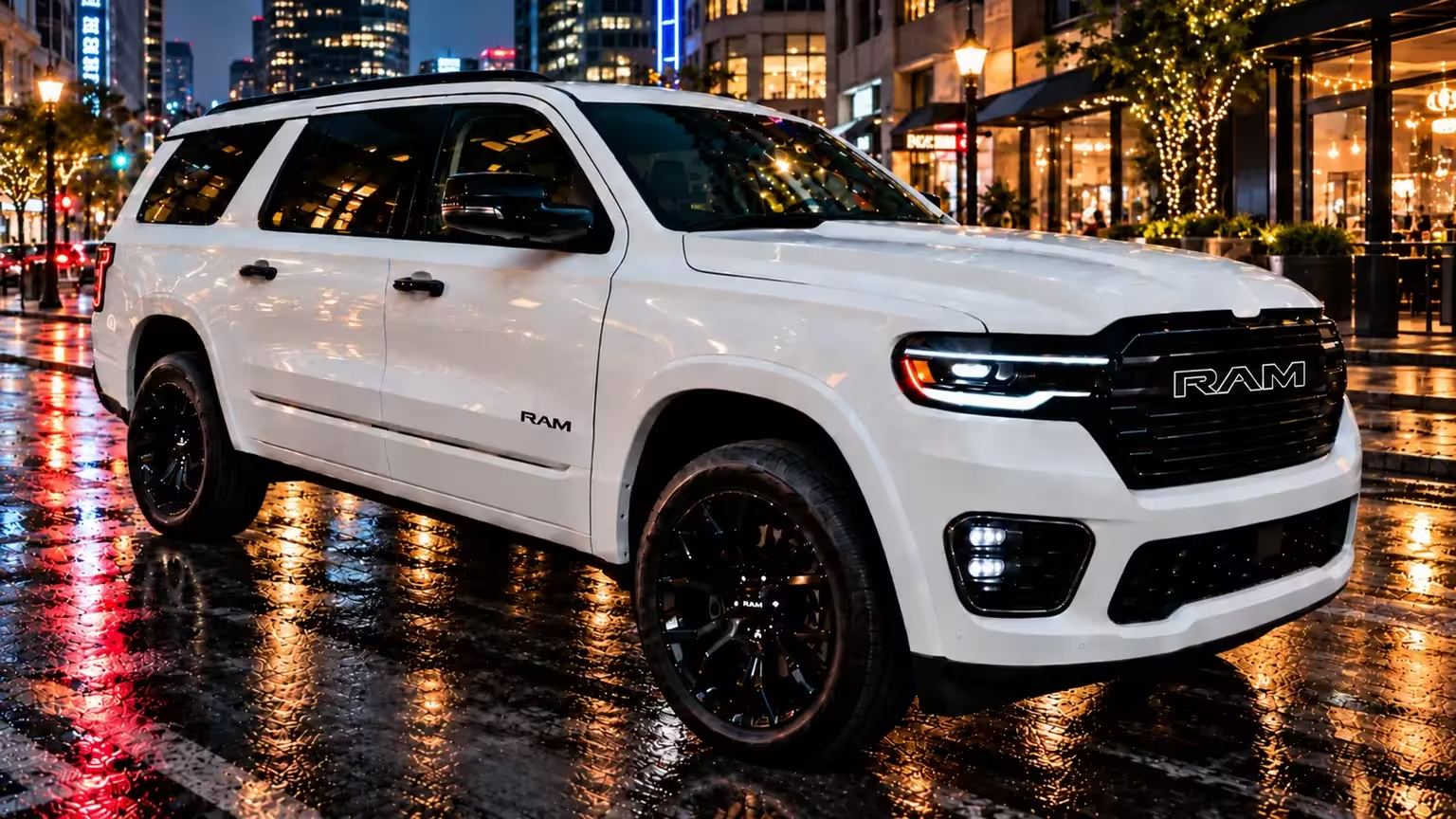
To succeed, Ram must forge a distinct identity for this SUV, moving beyond merely adapting a Jeep with different badges. Buyers will expect truck-inspired styling, serious towing capability, practical cargo space, and a cabin competitive with established American full-size SUVs. Speculation also exists around a possible SRT version, given Stellantis's confirmed expansion of SRT products across Dodge, Jeep, and Ram. However, claims involving a supercharged HEMI® V8 remain speculative until Ram releases technical details.
A full-size SUV would enable Ram to cater to customers desiring the presence and capability of a large pickup but requiring secure luggage space and three-row seating. This model could be especially relevant to Gulf buyers, where powerful American SUVs and V8 engines maintain a loyal following. However, a North American production plan does not confirm a GCC launch, and UAE and Saudi specifications, powertrains, warranty coverage, and timing have not been announced.
No. 4: Chrysler’s Reported Airflow Midsize Crossover
The Airflow narrative began long before the 2026 product plan, with Chrysler revealing the original Airflow Concept at CES in 2022 as a sleek electric crossover with an advanced digital interior. A darker Airflow Graphite followed, both appearing near-production and fueling strong expectations. The program later shifted direction. What Stellantis has now confirmed is a new midsize Chrysler crossover based on STLA One, not a direct production version of the original concept.
The STLA One architecture is designed for versatility, covering various vehicle sizes and supporting multiple powertrain types. Stellantis plans to introduce this platform from 2027, incorporating technologies like STLA Brain, STLA SmartCockpit, and future steer-by-wire capability. Its multi-energy design could allow Chrysler to offer petrol, hybrid, or electric propulsion, avoiding a single-solution approach. Industry reports continue to link the Airflow name with this midsize crossover, potentially around 2028, though Stellantis has not publicly confirmed the badge, final styling, or powertrain lineup.
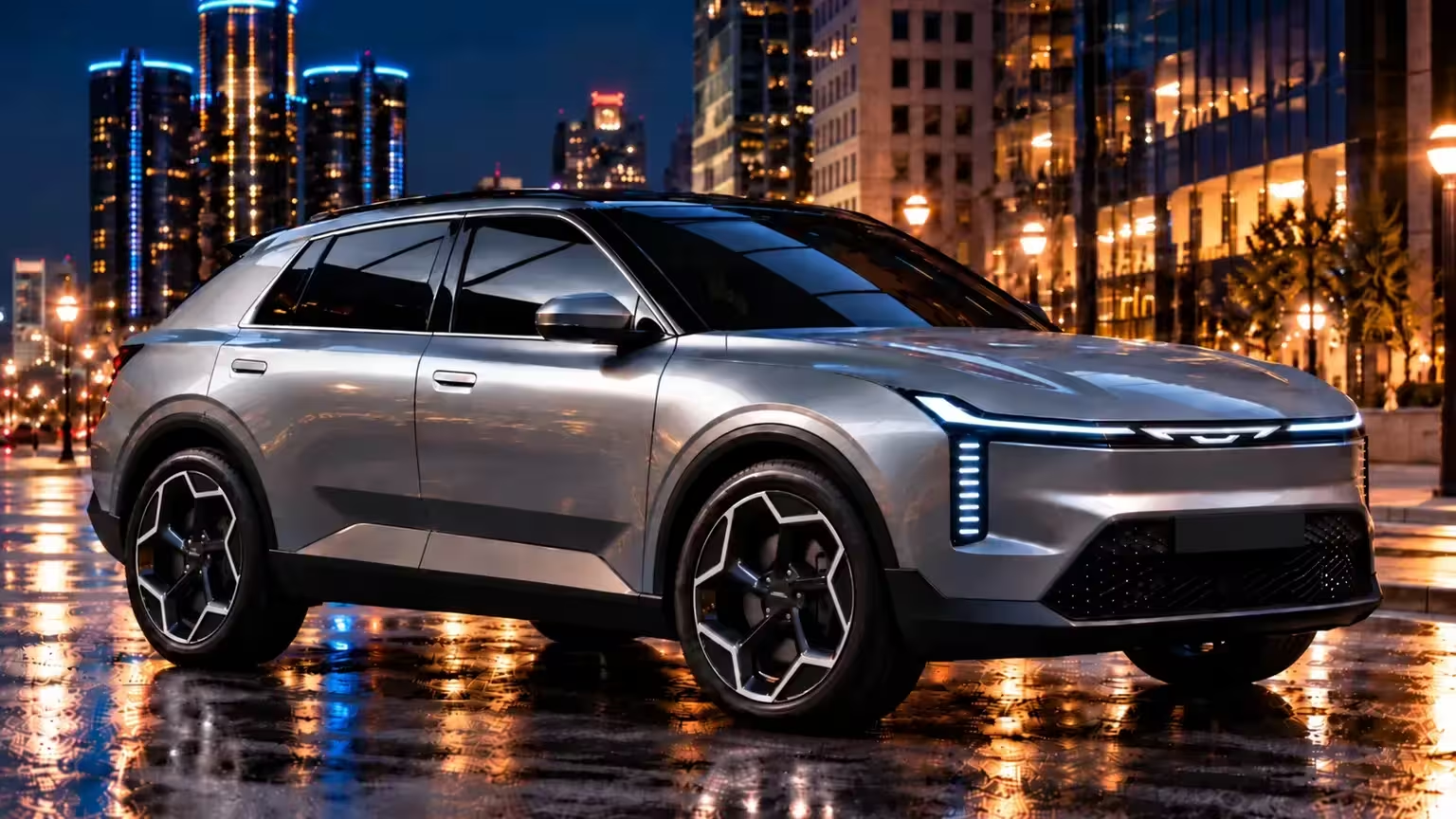
Chrysler needs this crossover to be a comfortable, practical, and recognizable family vehicle capable of competing in a crucial market segment, rather than another expensive technology showcase. The strongest interpretation of the Airflow concept would blend a spacious cabin, calm road manners, and modern connectivity with genuine powertrain choice, making it more accessible than an EV-only offering. For GCC customers, a well-developed hybrid version could be more immediately relevant than a model designed solely around North American charging infrastructure, though regional availability remains unconfirmed.
No. 3: Ram Rampage-Based Compact Pickup
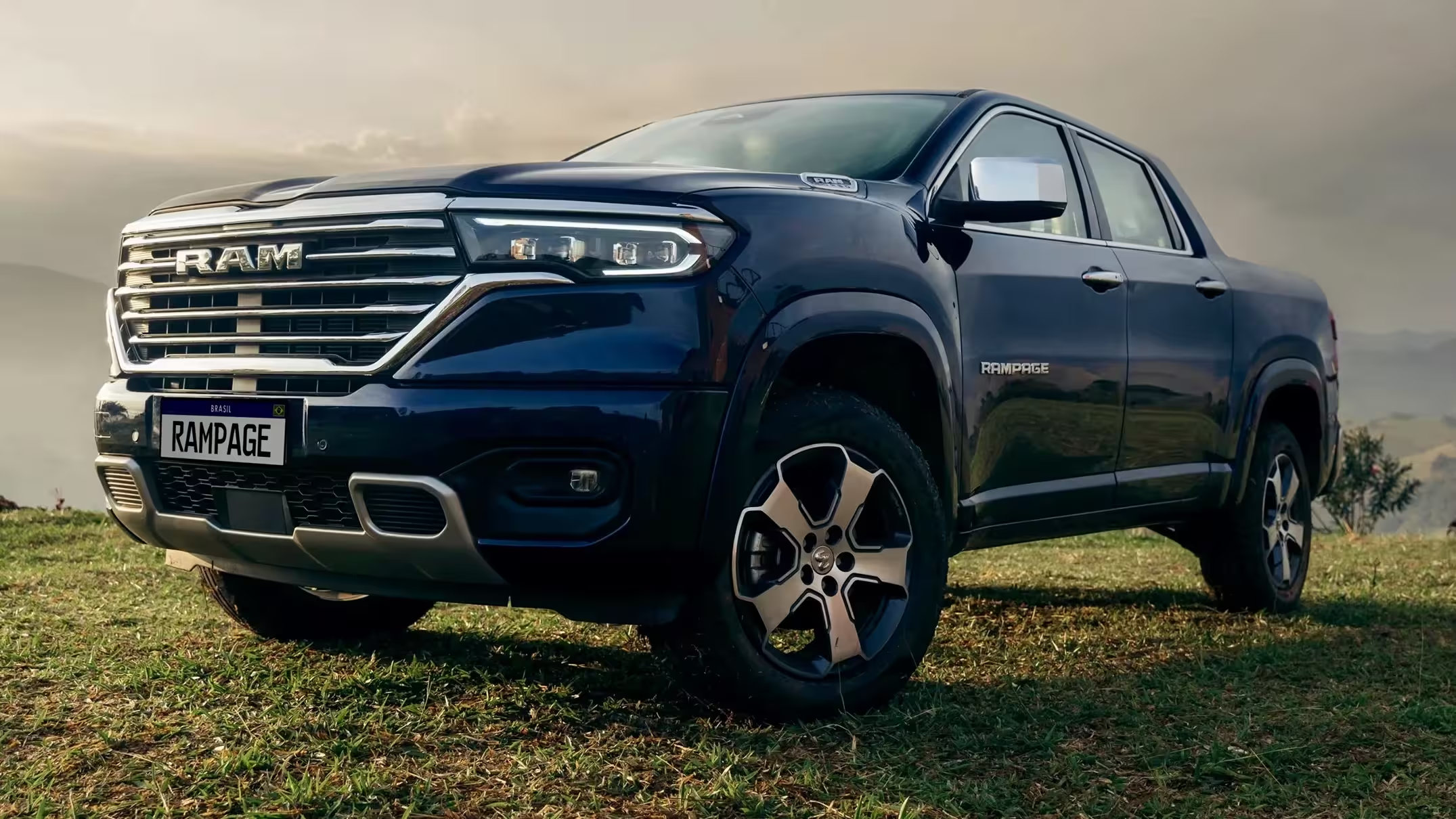
Unlike other vehicles on this list, the Ram Rampage is already a showroom product. Developed in South America, it is a compact unibody pickup positioned below traditional body-on-frame trucks. The existing Rampage demonstrates how Ram design and capability can be adapted to a smaller platform. The South American range includes turbocharged petrol and diesel engines, automatic transmission, and four-wheel drive, depending on market and version. The North American truck will be based on this product, but identical engines or specifications should not be assumed.
The image provided showcases the dark blue Ram Rampage, likely the South American model. Its front fascia is dominated by a large, horizontal chrome grille featuring prominent 'RAM' lettering. Modern, multi-element LED headlights flank the grille, contributing to a contemporary look. The truck is depicted on a grassy incline, highlighting its compact yet capable stance. Details like the 'RAMPAGE' nameplate on the front license plate (complete with 'BRASIL' and the Brazilian flag) and embossed on the front doors confirm its identity. The vehicle sports body-colored fender flares, chrome mirror caps, and stylish two-tone (silver and dark gray) alloy wheels, suggesting a blend of ruggedness and urban appeal.
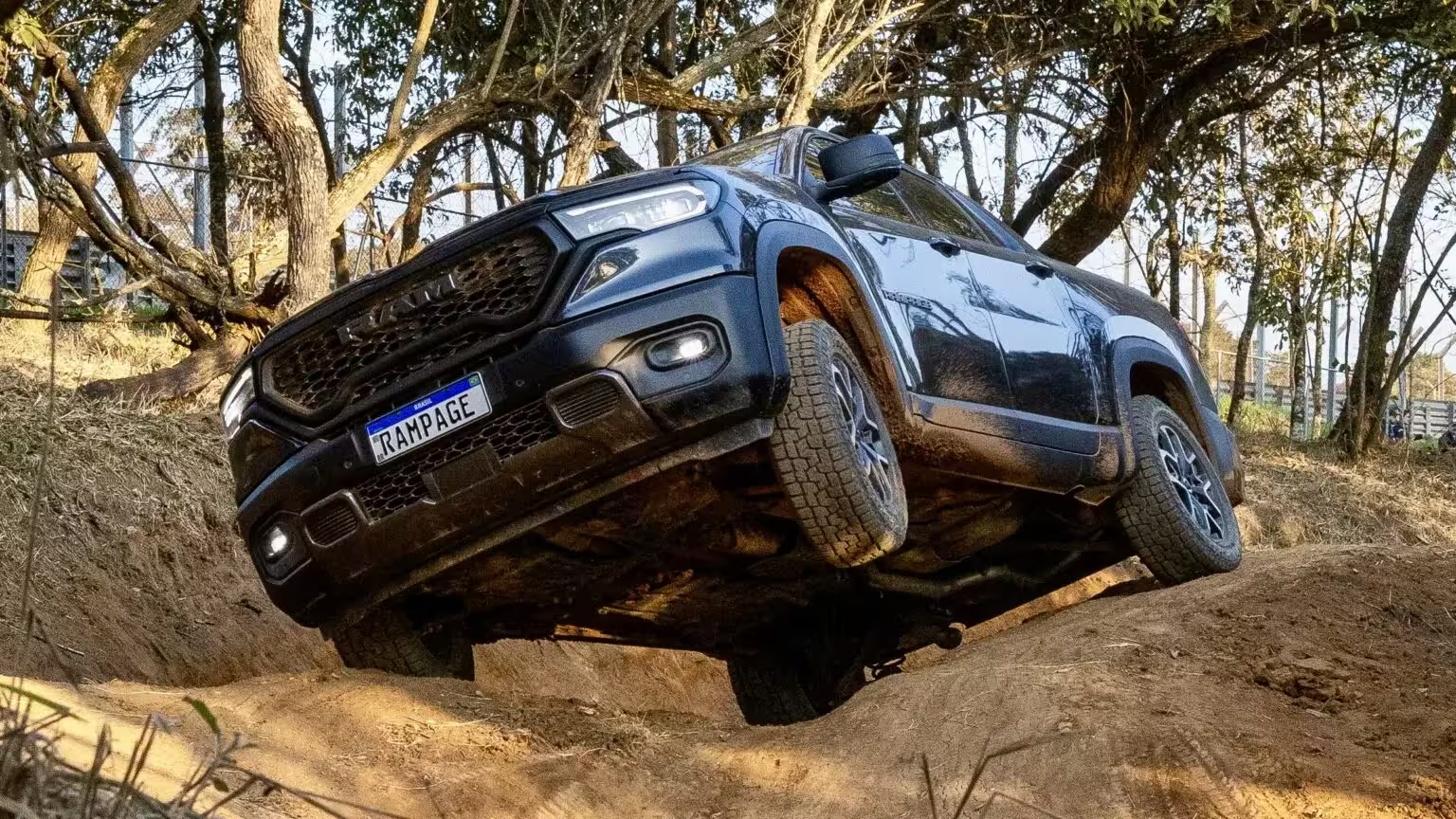
Stellantis explicitly confirmed a new compact pickup based on the Rampage during Investor Day, with company leadership identifying the Ford Maverick as the obvious segment competitor. The Ram product will be built in North America. This offers Ram an opportunity to engage customers who desire an open cargo bed without the size, fuel demand, or purchase commitment of a full-size truck. A compact pickup can serve as a daily commuter, recreational vehicle, and light-duty work partner. Hybrid power would be strategically sensible in this class, given that efficiency is a key driver for compact pickup customers, and reports suggest electrified options are under consideration, though North American engine range details are unconfirmed.
The Rampage's formula could work because its smaller, more road-focused design, with independent suspension and unibody construction, offers car-like comfort, while a practical bed and available four-wheel drive maintain the flexibility buyers expect from a pickup. It could also broaden Ram’s international appeal, as a compact truck is more manageable in crowded cities and narrow parking spaces, making the format potentially interesting for the UAE and other export markets. No GCC launch has been announced, and the South American vehicle should not be treated as confirmation of a future regional specification.
No. 2: Chrysler’s Reported Arrow and Arrow Cross
The two smallest Chrysler programs may ultimately be more crucial to the brand’s recovery than any high-performance halo vehicle. Stellantis has confirmed two related crossovers positioned below its future midsize Chrysler, expected to use shared, proven European vehicle foundations and target customers prioritizing function, practicality, and attainable ownership. Industry reports identify these vehicles as the Chrysler Arrow and Arrow Cross, also linked to future Fiat models reportedly using the Grizzly name. One is expected to adopt a more upright crossover shape, and the other a sleeker fastback profile. Stellantis has not publicly confirmed these relationships, production names, or final designs.
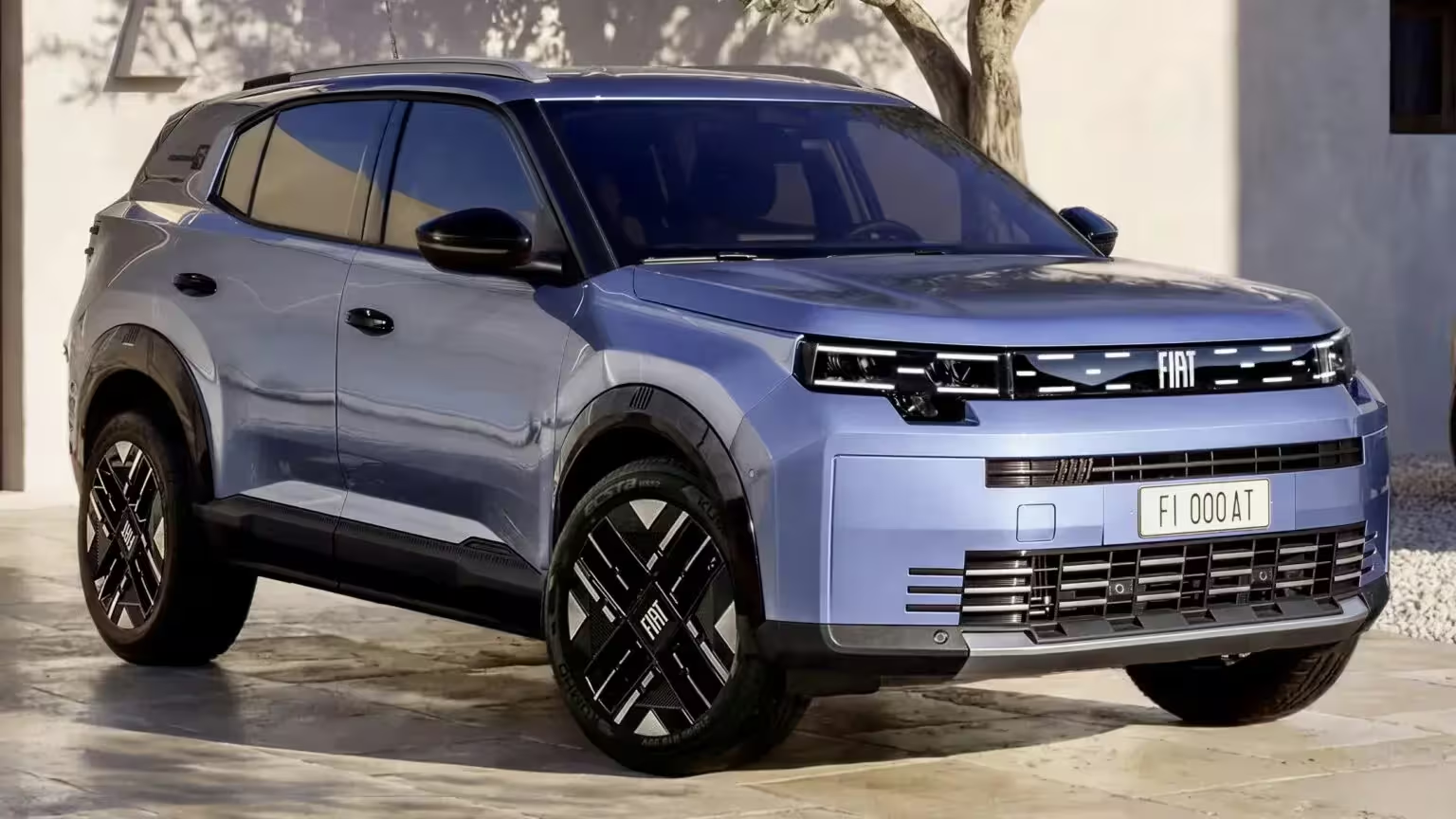
The broader strategy is official: Chrysler is expected to re-enter lower-priced areas of the new-car market where Stellantis’s American brands currently have limited representation. Shared platforms can reduce development costs, but Chrysler still requires distinctive styling, interior tuning, and technology to ensure these vehicles feel like genuine brand products rather than simple rebadges. Powertrain flexibility will be equally important, with a mix of efficient combustion, hybrid, and electric options allowing Stellantis to adapt each model to regional regulations and customer demand. The exact North American configurations remain unannounced.
The strategy of two related Chrysler crossovers makes sense: one upright model maximizes cabin and cargo space, while a fastback companion offers a more expressive shape without requiring an entirely separate engineering program. This provides Chrysler with two distinct personalities at different price points, benefiting from shared components. If executed well, this pair could introduce a new generation of buyers to Chrysler and create a natural progression toward the future midsize crossover and Pacifica. Their relevance to the GCC will hinge on regional distribution, cooling specifications, powertrain selection, and after-sales support, none of which has been confirmed.
No. 1: Ram Dakota Midsize Pickup
The Dakota is arguably the most strategically important Ram on this list, as it marks the brand's return to a segment it exited over a decade ago. Ram currently asks customers to leap from compact products offered in selected overseas markets to the full-size Ram 1500. In North America, this leaves a significant void, with no direct Ram rival for the Toyota Tacoma, Ford Ranger, Chevrolet Colorado, GMC Canyon, or Nissan Frontier.
Stellantis has confirmed that the Dakota name will return for an all-new North American midsize truck. During Investor Day, company leadership openly identified the Tacoma as the segment benchmark it intends to challenge. Stellantis’s manufacturing plan places the new midsize truck at the Toledo Assembly Complex in Ohio, with launch timing expected in 2028. The Toledo location is significant because it also produces the Jeep Wrangler and Gladiator, making a capability-focused, body-on-frame layout a logical expectation, though Ram has not yet published the Dakota’s architecture, suspension, dimensions, or four-wheel-drive system.

Reports point toward a Crew Cab launch and turbocharged four-cylinder power at the accessible end of the range, though neither detail should be treated as final until Ram confirms it. Towing capacity, payload, trim structure, and off-road packages also remain unknown. The decision by Stellantis to expand SRT across Ram naturally sparks speculation about a high-performance Dakota. The brand has historical precedent with the Dodge Dakota R/T, which combined compact-truck proportions with V8 power. A modern performance derivative could establish a strong identity for Ram in a crowded midsize segment, potentially prioritizing on-road acceleration, handling, and visual presence. For now, a Dakota SRT remains a possibility rather than a confirmed model.
The Dakota could matter in the Gulf because midsize pickups are easier to maneuver than full-size trucks while still offering useful towing, cargo, and off-road ability. A properly specified Dakota could appeal to buyers who appreciate Ram design but do not require the dimensions of a 1500. The UAE and Saudi Arabia are natural markets to watch, as pickups, desert-capable vehicles, and American performance models already enjoy strong audiences. However, Ram has announced the Dakota specifically as part of its North American expansion, and no official GCC allocation or launch date has been released.
Stellantis's Forward-Thinking Powertrain Strategy
One of the most crucial shifts in Stellantis’s strategy is its departure from treating a single propulsion type as the universal solution for every buyer. The company’s future platforms are engineered to accommodate diverse solutions across different segments. Conventional engines remain integral to the plan, HEMI® V8 power is returning to selected products, hybrids are expanding, and range-extended vehicles are being prepared for customers seeking electric driving with enhanced long-distance flexibility.
This multi-energy approach is particularly relevant outside North America, where charging access, fuel prices, regulations, towing needs, and climate vary substantially between regions. A multi-energy architecture grants Stellantis greater flexibility to create specifications tailored to each market. The challenge will be to deliver this variety without excessive complexity. While shared architectures such as STLA One are intended to reduce cost and development time, buyers will ultimately judge each product on its quality, reliability, capability, and value, rather than merely the corporate platform beneath it.
Assessing Impact: Which Vehicle Holds the Most Importance?
The answer to which vehicle is most important hinges on how success is measured. The Ram Dakota fills the clearest competitive gap and has the potential to generate meaningful sales volume in a proven truck segment. The Rampage-based compact pickup offers Ram access to younger, urban, and efficiency-conscious buyers. The full-size SUV, on the other hand, presents the greatest opportunity for expanding into towing, luxury, and performance markets.
For Chrysler, the three planned crossovers are not optional experiments; they are the fundamental building blocks of a broader lineup. The midsize model can re-establish Chrysler in the vital family-crossover market, while the two smaller vehicles can provide the brand with a more attainable entry point. Collectively, these products illustrate a company committed to competing in more segments of the market, rather than depending on a limited number of aging nameplates.
What This Means for Automax® Customers
Regional launches, GCC specifications, and export availability will become clearer as Ram, Chrysler, and Stellantis publish production details. Automax® will continue to closely follow the Dakota, the Rampage-based compact pickup, and the Ram full-size SUV, as they could become highly relevant to UAE, Saudi, and other export customers if suitable specifications are eventually released. Drivers seeking a new Ram today can explore the current Automax® Ram inventory, which features available GCC-specification trucks with current vehicle details and warranty information.
Final Thoughts: A Clearer Direction for Ram and Chrysler
Stellantis’s future plan is encouraging because it targets genuine market gaps rather than merely adding cosmetic variations to an unchanged lineup. Ram is preparing to expand downward into compact and midsize pickups and outward into a full-size SUV. Chrysler is finally moving toward a comprehensive crossover range, moving beyond its historical reliance almost entirely on one vehicle family. The next stage is execution; each product needs competitive quality, sensible powertrain choices, and a clear brand identity. While timelines and names may still evolve, especially for the reported Chrysler models, the strategic direction is now much clearer. If Stellantis successfully delivers what it has outlined, the close of this decade could herald the most varied Ram and Chrysler lineup in years.
Frequently Asked Questions
Which new Ram vehicles has Stellantis confirmed?
Stellantis has confirmed a North American compact pickup based on the Ram Rampage, an all-new Dakota midsize pickup, and a full-size Ram SUV referred to during Investor Day as the Ram Charger.
Is the Ram Dakota officially returning?
Yes. Stellantis has confirmed the Dakota name for its new North American midsize pickup. Production is planned for the Toledo Assembly Complex, with launch timing expected in 2028.
Is the future Ram SUV the same as the Ram 1500 REV?
No. The Ram 1500 REV is a range-extended full-size pickup program that was previously associated with the Ramcharger name. The future Ram Charger or Ramcharger discussed at Investor Day is a separate full-size SUV program.
Will the Ram SUV have a V8 engine?
Stellantis has confirmed combustion and range-extended versions of the large SUV program. Enthusiast reporting has pointed toward a strong V8 focus, but Ram has not published the final engine lineup.
Is the Chrysler Airflow officially confirmed for production?
Stellantis has confirmed a new midsize Chrysler crossover based on STLA One. The Airflow production name has been reported but was not publicly confirmed in the company’s Investor Day transcript. The 2022 Airflow Concept should not be treated as the final production vehicle.
Are the Chrysler Arrow and Arrow Cross official names?
Not yet. Stellantis has confirmed two related smaller Chrysler crossovers, but Arrow and Arrow Cross remain reported names until the company publicly announces them.
Is the Ram Rampage coming to North America?
Yes. Stellantis has confirmed a North American compact pickup based on the South American Rampage and said it will be built in North America. Final engines, trims, and detailed timing have not been released.
Will these vehicles be available in the UAE or Saudi Arabia?
No official UAE or Saudi launch plans have been announced for these future North American models. GCC availability, specifications, and warranty coverage will need to be confirmed separately.