New vs. Used Car: Your 5-Year Ownership Cost Guide for GCC & Exports
By Automax
Decipher the true cost of car ownership. This Automax® guide breaks down 5-year expenses for new and used Land Cruiser, Patrol, and X6.
Introduction: Beyond the Sticker Price – Understanding True Ownership Costs
A used car can certainly save you money the moment you sign the papers. But does that initial saving translate into a lower cost over the long term? For many buyers, whether in the GCC or internationally, the answer depends on a comprehensive understanding of total ownership costs. This isn't just about the purchase price or monthly instalment; it encompasses everything from financing and insurance to maintenance and eventual resale value. An initial discount on a used vehicle might seem appealing, but if it's too close to a new car's price, the savings could quickly diminish after factoring in finance charges, potential maintenance, and the vehicle's history.
For those comparing new and used cars in 2026, the critical measure is the cost of owning each vehicle over the same period. Whether you're buying locally or sourcing a car for another market, understanding this calculation is key to making an informed decision. This Automax® guide, updated 26 October 2026, meticulously explains this calculation and provides three detailed examples, including a scenario where the assumed used-car discount doesn't result in a lower ownership budget. The worked examples are illustrative budgets, not live quotations or predictions of 2031 resale values. USD is used as a common reference currency. We encourage you to replace the assumed prices, finance terms, and running costs with quotations specific to your own destination.
What Five-Year Ownership Really Costs
The fundamental calculation for ownership cost begins with what you pay for the car and subtracts what you receive when you sell it. This difference is known as depreciation. To this, you then add all the costs associated with financing and using the vehicle throughout your ownership period. The comprehensive formula is:
The term 'net resale proceeds' is crucial here. It refers to the amount you expect to receive after any selling costs or trade-in deductions, not merely the advertised asking price of a similar vehicle. It's also important to avoid double-counting expenses. If depreciation is already factored into the calculation, only add loan interest and fees, not the entire loan repayment again, as the principal repays part of the purchase price already accounted for in depreciation. Similarly, a deposit is part of the purchase price and not an additional ownership expense.
Depreciation Is the Purchase Price You Do Not Recover
Depreciation represents the portion of your purchase price that you do not recover when you sell the vehicle. For instance, if you buy a vehicle for USD 80,000 and sell it five years later for USD 45,000, your depreciation cost is USD 35,000. This cost is incurred regardless of how well you maintain the vehicle or how diligently you make payments.
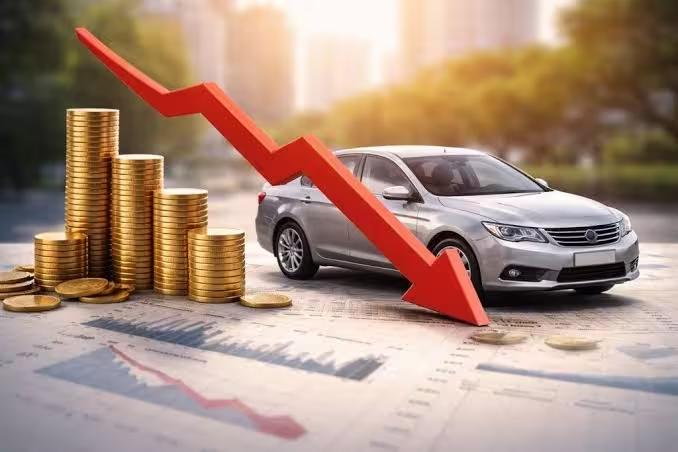
For a used car, your depreciation calculation starts from your own purchase price. The amount its first owner lost is not your expense. What truly matters is the difference between what you pay now and what your older, higher-mileage vehicle eventually returns to you. When estimating resale value, always use comparable vehicles. Consider the generation, engine, trim, regional specification, mileage, and condition to ensure an accurate comparison. For example, comparing an older Patrol V8 with a newer twin-turbo V6 involves different products, and the price gap cannot be solely attributed to buying used.
Financing Can Change the Result
Financing terms significantly impact your total ownership cost. It’s essential to compare the deposit, amount financed, interest or profit charges, fees, and total repayment. These terms vary widely based on the lender, destination, borrower, and vehicle. A deposit or loan duration used in a hypothetical example is not a universal rule.
Always look beyond just the monthly instalment. As illustrated by guides like the Consumer Financial Protection Bureau’s comparison, the amount borrowed, repayment period, and annual percentage rate (APR) are all crucial when assessing borrowing costs. Furthermore, compare interest rates on the same basis: a flat rate calculates interest against the original principal throughout the term, while a reducing-balance rate applies interest to the outstanding balance as it decreases. The same percentage can represent vastly different borrowing costs under these two methods.
For the examples in this guide, we assume a 20% deposit, a 60-month loan, and an annual flat interest of 2.75% for new vehicles or 3.25% for used vehicles. We also add a one-off processing fee of 1% of the amount borrowed, paid separately, with no minimum or cap. These are hypothetical inputs and not actual lender offers or legal limits. There is no balloon payment or deferred first instalment assumed. If your quotation uses a different structure, ensure you use its actual repayment schedule and charges. At our assumed rates, borrowing USD 50,000 costs USD 6,875 in flat interest for a new vehicle or USD 8,125 for a used one over five years. This USD 1,250 difference is a tangible factor in the ownership comparison.
Insurance Needs a Comparable Level of Cover
Always obtain insurance quotations for the specific country where the car will be driven. Factors such as vehicle value, repair costs, driver details, and the level of cover significantly affect the premium. Allianz's explanation of car-insurance premiums provides examples of these factors, but it is vital to use a local insurer to establish what applies to your purchase.
Ensure you compare comprehensive cover on a broadly equivalent basis. A used-car quote that includes different repair arrangements, a higher excess, or fewer benefits might appear cheaper, but it could transfer more costs to you after a claim. The insurance figures used in our examples are assumed totals for five years of comprehensive cover. They allow for different budgets for new and used vehicles but do not assume a fixed premium reduction each year. Always confirm the available repair cover and benefits for the exact vehicle and its age.
Maintenance and Warranty Are Different Budget Lines
It's crucial to distinguish between a warranty and a service package. A warranty covers items defined in its terms, while a service package covers specific work. Before reducing your maintenance allowance, establish precisely what each includes. For both new and used cars, you must budget for scheduled servicing and wear items like tyres and brakes. Always check written coverage before assuming these expenses are included.
For a used car, verify the remaining warranty and service entitlement, confirm if they transfer to you, and ensure the maintenance history satisfies their conditions. If you are exporting the vehicle, obtain written confirmation that the cover can be used in the destination country. Our examples separate scheduled servicing and wear items from an additional repair reserve. A repair reserve is contingency money, not a forecast bill, and any unspent reserve remains your money. The larger used-car reserves in our examples are conservative scenario choices, rather than measured failure rates or brand reliability rankings.
Assumptions Behind the Three Worked Examples
Each example compares a new 2026 petrol vehicle with a comparable 2025 used version of the same generation, engine type, and trim. We assume the used vehicle is approximately one year old, has covered 20,000 km, and passes an independent inspection with a documented history. Both vehicles then cover 20,000 km annually for five years, adding 100,000 km. At the point of sale in 2031, the new purchase will have covered approximately 100,000 km, and the used purchase approximately 120,000 km. Their differing age and mileage are reflected in separate resale assumptions.
All figures are in USD for comparison and represent hypothetical budgets, not regional price averages. The 'purchase figure' denotes the complete acquisition cost before registration and finance. For an imported vehicle, this includes applicable freight, transit insurance, clearance, non-recoverable taxes, and compliance costs. Do not add the same cost twice. Fuel is budgeted at an assumed average of USD 0.80 per litre. Consumption assumptions are 12.5 L/100 km for the Land Cruiser, 13 L/100 km for the Patrol, and 9.5 L/100 km for the X6. These are scenario inputs, not official economy figures or future pump-price forecasts; consumption is held equal within each new-versus-used pair.
Five-year registration and administration allowances are USD 1,000 for each new vehicle and USD 1,300 for each used vehicle, including an additional allowance for purchase inspection and transfer. These are assumed budgets, rather than any country's published fees. Parking, tolls, fines, accessories, accident excesses, and the opportunity cost of cash are excluded. No free servicing or promotional finance is assumed. Insurance, workshop costs, taxes, and resale expectations must be adjusted for your specific country of ownership.
Example One: Toyota Land Cruiser GXR 3.5TT
Buying New
Assume a complete acquisition price of USD 80,000 and net resale proceeds of USD 45,000 after five years. Depreciation is therefore USD 35,000. The 20% deposit is USD 16,000, leaving a loan of USD 64,000. Interest totals USD 8,800 and the monthly instalment is approximately USD 1,213.33. The processing fee is USD 640, bringing total finance charges to USD 9,440. Allow USD 6,500 for insurance, USD 6,500 for servicing and wear, USD 1,500 as a repair reserve, USD 10,000 for fuel, and USD 1,000 for registration and administration. The five-year budget including reserve is USD 69,940.
Buying One Year Old
Assume a complete used acquisition price of USD 67,000 and net resale proceeds of USD 41,000 after another five years. Depreciation is USD 26,000. The deposit is USD 13,400 and the loan USD 53,600. Interest totals USD 8,710 and the instalment is USD 1,038.50. Add the USD 536 processing fee for USD 9,246 in finance charges. Allow USD 5,500 for insurance, USD 8,200 for servicing and wear, USD 3,200 as a repair reserve, USD 10,000 for fuel, and USD 1,300 for registration and administration. The five-year budget including reserve is USD 63,446.
What the Comparison Tells You
The used Land Cruiser holds a budget advantage of USD 6,494, which equates to approximately USD 108 per month across the ownership period. Its assumed USD 13,000 acquisition discount creates ample room for higher maintenance and contingency allowances. This result, however, hinges on the actual offers and local resale prospects. For an export purchase, it’s vital to compare the used car's delivered cost with the new vehicle's delivered cost. When browsing Automax® Land Cruiser inventory, always check the engine, trim, and regional specification.
Example Two: Nissan Patrol LE Platinum City 3.5TT
Buying New
Assume a complete acquisition price of USD 96,000 and net resale proceeds of USD 51,000 after five years. Depreciation is USD 45,000. The deposit is USD 19,200 and the loan USD 76,800. Interest totals USD 10,560, the instalment is USD 1,456, and the processing fee USD 768. Total finance charges are USD 11,328. Allow USD 8,000 for insurance, USD 7,200 for servicing and wear, USD 1,500 as a repair reserve, USD 10,400 for fuel, and USD 1,000 for registration and administration. The five-year budget including reserve is USD 84,428.
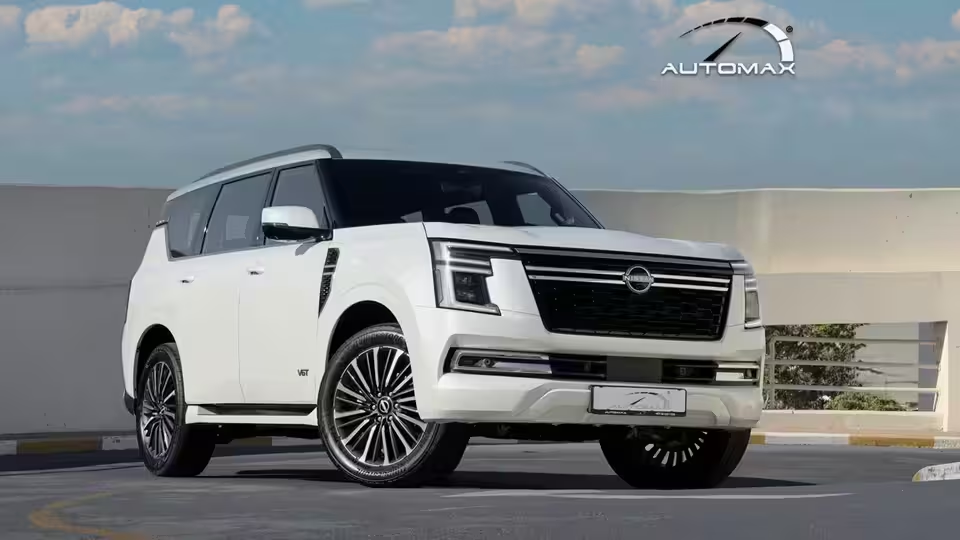
Buying One Year Old
Assume a complete used acquisition price of USD 91,000 and net resale proceeds of USD 47,000. Depreciation is USD 44,000. The deposit is USD 18,200 and the loan USD 72,800. Interest totals USD 11,830, the instalment is USD 1,410.50, and the processing fee USD 728. Total finance charges are USD 12,558. Add USD 7,200 for insurance, USD 8,000 for servicing and wear, USD 3,200 as a repair reserve, USD 10,400 for fuel, and USD 1,300 for registration and administration. The five-year budget including reserve is USD 86,658.
What the Comparison Tells You
Under these specific assumptions, buying new offers a budget advantage of USD 2,230, despite the used car's lower monthly instalment. Its USD 5,000 acquisition discount leaves limited room to absorb the higher finance and maintenance allowances for the used model. This result is particularly sensitive to repair spending; excluding both repair reserves, the new option is ahead by only USD 530. This does not imply that a new Patrol always costs less. For example, if the used acquisition price were reduced to USD 86,000, keeping all other assumptions constant, its budget would fall to USD 80,968, giving the used vehicle a USD 3,460 advantage. This highlights that the actual purchase discount is more influential than a broad rule about vehicle age. Always compare a complete quotation for the Patrol vehicles available at Automax®.
Example Three: BMW X6 xDrive40i M Sport
Buying New
Assume a complete acquisition price of USD 96,000 and net resale proceeds of USD 39,000 after five years. Depreciation is USD 57,000. The deposit is USD 19,200 and the loan USD 76,800. Interest totals USD 10,560, the instalment is USD 1,456, and the processing fee USD 768. Total finance charges are USD 11,328. Allow USD 8,500 for insurance, USD 6,500 for servicing and wear, USD 2,700 as a repair reserve, USD 7,600 for fuel, and USD 1,000 for registration and administration. The five-year budget including reserve is USD 94,628.
Buying One Year Old
Assume a complete used acquisition price of USD 83,000 and net resale proceeds of USD 35,000. Depreciation is USD 48,000. The deposit is USD 16,600 and the loan USD 66,400. Interest totals USD 10,790, the instalment is USD 1,286.50, and the processing fee USD 664. Total finance charges are USD 11,454. Allow USD 7,200 for insurance, USD 8,000 for servicing and wear, USD 6,700 as a repair reserve, USD 7,600 for fuel, and USD 1,300 for registration and administration. The five-year budget including reserve is USD 90,254.

What the Comparison Tells You
The used X6 demonstrates a budget advantage of USD 4,374, or approximately USD 73 per month over five years. In this case, the lower assumed depreciation for the used vehicle outweighs the additional maintenance and contingency allowances. It is crucial to verify any remaining service contract before adding a separate servicing allowance. If a transferable package covers work already budgeted here, remove the duplicated expense. Confirm its geographical validity if you are importing the car, along with the warranty provider, expiry date, mileage limit, and exclusions. Apply the same rigorous checks when comparing a used offer with BMW vehicles in Automax® inventory. It's important to remember that the assumed repair reserves are not predictions of any individual X6's repair bill.
How Easily Can the Result Change?
Small changes in assumptions can significantly alter the outcome. For instance, if a vehicle sells for USD 5,000 less than assumed, its ownership cost rises by USD 5,000. Since future resale value is an estimate, a small apparent advantage should not be the sole deciding factor. Finance terms also deserve a sensitivity check. On a USD 50,000 loan over five years, an additional one percentage point of annual flat interest adds USD 2,500 to the total cost. Always use your lender's repayment schedule when the quotation uses a reducing balance or another structure.
Keep contingency funds separate from money actually spent. Without unexpected repairs, the Land Cruiser scenarios total USD 68,440 for new and USD 60,246 for used. The X6 scenarios total USD 91,928 for new and USD 83,554 for used. These figures retain the servicing and wear allowances but remove the additional repair reserves. Currency fluctuations also matter for international purchases. Compare quotations using the same currency and include conversion or payment charges. If you anticipate selling in a different currency, factor that uncertainty alongside your resale estimate. These examples assume both loans are fully repaid after 60 payments; selling earlier introduces an outstanding balance and potentially settlement charges, so recalculate for your expected ownership period.
When Buying New Makes More Sense
Buying new is worth considering when the used-car discount is narrow, the finance offer is significantly stronger, or the written warranty and service terms provide benefits you highly value. An unused vehicle also offers a clear starting point for tracking maintenance and mileage, providing peace of mind. The most accurate comparison always remains the complete quotation. Ask what is included, who provides the warranty, where repairs can be carried out, and whether servicing incurs a separate cost. A badge or model year alone cannot answer these critical questions.
When Buying Used Makes More Sense
Used cars can offer strong value when a substantial purchase discount remains after meticulously accounting for finance, inspection findings, servicing, and realistic resale proceeds. Verified remaining warranty or service cover can further strengthen the position of a used vehicle. Always arrange an independent mechanical inspection before finalising your budget. The vehicle's condition, history, and upcoming maintenance should determine the allowance you set aside. If the lower price leaves no room to address identified issues, it’s advisable to revisit the offer or compare another vehicle.
What GCC and Export Buyers Should Add to the Comparison
For GCC and international buyers, it’s imperative to compare the cost of having each vehicle ready to use in the destination country. A vehicle advertised before shipping and import charges is at a different stage of the purchase process than a locally registered car. Request a quotation that clearly identifies what is included in delivery and what you must pay separately. For an import, establish all applicable documentation, transport, insurance, clearance, taxes, and compliance costs. Crucially, confirm vehicle eligibility and registration requirements with the destination's authorities before committing to shipping.
Also, check the level of support available after delivery. Obtain written confirmation of where warranty claims can be handled, which service arrangements remain valid, and how maintenance will be supplied locally. The resale assumption should accurately reflect demand for that exact engine, specification, and vehicle history in the market where you expect to sell. Automax® provides export quotations and shipping support, offering a destination-specific quote as the ideal starting point for your ownership budget.
Conclusion: Make an Informed Decision with Automax®
The decision to buy a new or used car is complex, extending far beyond the initial price. As this Automax® guide demonstrates, a thorough calculation of five-year ownership costs, encompassing everything from depreciation and financing to maintenance and insurance, is essential for making a financially sound choice. The examples of the Toyota Land Cruiser, Nissan Patrol, and BMW X6 illustrate that while a used car often presents an advantage, this isn't always a given, and specific market conditions, discounts, and individual vehicle characteristics can swing the balance. By carefully evaluating all expenses and considering your specific circumstances, especially as a GCC or international buyer, you can navigate the market with confidence and choose the vehicle that truly offers the best value for your investment. Automax® is here to help you get those comprehensive, destination-specific quotations to start your journey right.