Modern Car Technology: Shaping the Future of Driving
By Adam Chehayeb
Explore the rapid advancements in modern car technology, from ADAS to connected infotainment and electrification, transforming our driving experience.
Introduction
Over the past decade, the automotive industry has experienced rapid technological advancement, fundamentally redefining the very essence of a vehicle. Modern vehicles are no longer merely mechanical machines designed to transport people from one place to another. Today’s cars are sophisticated, integrated platforms equipped with advanced systems that significantly enhance safety, comfort, connectivity, and overall driving performance. This profound evolution is fundamentally changing how we interact with our vehicles and, by extension, the world around us.
From intelligent driver-assistance systems to advanced infotainment platforms, modern car technology is transforming the way people interact with their vehicles. These innovations not only make driving more enjoyable and convenient but also contribute significantly to safer roads and improved efficiency across the transportation landscape. As manufacturers continue to invest heavily in research and development, the driving experience is evolving faster than ever before, promising a future of smarter, more connected, and ultimately more enjoyable journeys.
Advanced Driver-Assistance Systems (ADAS)
One of the most significant and impactful developments in modern vehicles is the widespread introduction of Advanced Driver-Assistance Systems (ADAS). These sophisticated systems leverage an array of cameras, sensors, and radar technology to continuously monitor the vehicle's surroundings, helping drivers stay acutely aware of potential hazards and proactively avoid them. Many new vehicles now include a wide range of these driver-assistance features, which collectively enhance safety and substantially reduce the likelihood of accidents.
These cutting-edge technologies work in concert to support drivers, especially during extended journeys or in heavy traffic scenarios, thereby helping to reduce fatigue and significantly improving overall safety for all road users. They represent a crucial and ongoing step towards a future where driving is less strenuous, more intuitive, and dramatically safer for everyone on the road.
Connected Infotainment Systems
Modern vehicles are also becoming more connected than ever before, seamlessly integrating into our digital lives. Advanced infotainment systems allow drivers and passengers to access a wealth of information and entertainment, including navigation, music, communication tools, and robust smartphone integration, all directly from the vehicle’s dashboard. Most new cars now feature large, responsive touchscreen displays powered by sophisticated operating systems that provide an intuitive and highly engaging user experience. This deep integration ensures that drivers can stay informed and entertained without distraction, keeping their focus where it belongs – on the road.
These systems allow drivers to stay connected and productive without taking their attention away from the road, creating a more convenient, enjoyable, and safer driving experience. The seamless interface fosters a sense of digital familiarity, much like interacting with a personal smart device, making the car an extension of one's connected lifestyle.
Improved Safety Technology
Safety technology has improved dramatically in modern vehicles, making today’s cars safer than ever before. Manufacturers are continuously developing new systems designed to protect both drivers and passengers comprehensively. Many vehicles now include a comprehensive suite of safety features that actively monitor the driving environment and respond to potential dangers, going significantly beyond passive safety measures to actively prevent incidents before they even occur.
These innovations help drivers react more quickly and appropriately to unexpected situations and significantly reduce the overall risk of accidents. The layered approach to safety means that cars are now equipped to handle a wider array of scenarios, providing enhanced peace of mind for all occupants.
Digital Displays and Smart Dashboards
Traditional analog gauges are gradually being replaced by fully digital instrument clusters and smart dashboards, fundamentally altering the driver's interface. These advanced digital displays allow drivers to customize the information shown on their screens and access real-time data about their vehicle with unprecedented clarity. The shift from physical dials to dynamic digital interfaces offers unprecedented flexibility and clarity, effectively transforming the driver’s cockpit into a highly personalized and intelligent command center.
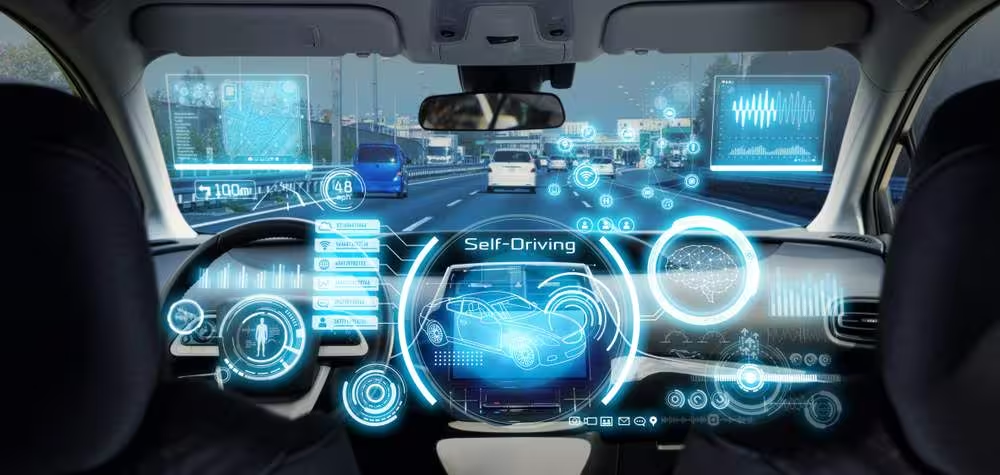
A glimpse into the future reveals that modern car technology integrates holographic displays for self-driving information, navigation, and real-time vehicle data, enhancing both safety and convenience. As depicted in advanced concepts, these interfaces can project crucial information directly onto the windshield, creating an augmented reality experience. For instance, a driver might see their current speed of '48 mph' and distance to a point '100m' ahead displayed holographically, alongside a detailed navigation map showing traffic conditions. Other digital overlays can illustrate connectivity status with various icons, or even a wireframe schematic of the car itself, all providing a comprehensive overview of the vehicle’s operational status and surroundings. A stylized brain icon often signifies the advanced AI at work behind these sophisticated systems, processing complex data such as the waveform patterns seen in some displays, which could represent sensor data or system diagnostics.
These technologies provide clear and easily accessible information, helping drivers stay focused while still accessing important vehicle data quickly and intuitively. They create a seamless and integrated interaction between the driver and the vehicle, making every journey more informed, less stressful, and ultimately more enjoyable.
Electrification and Hybrid Technology
Another major transformation sweeping through the automotive industry is the rapid rise of electric and hybrid vehicles. Automakers are increasingly investing significant resources in electrified powertrains to improve efficiency, reduce emissions, and meet evolving environmental standards. Hybrid and electric vehicles utilize advanced battery systems and electric motors to complement or entirely replace traditional internal combustion engines, marking a significant and necessary shift towards sustainable transportation solutions.
As charging infrastructure continues to expand globally and battery technology experiences continuous improvements, electrified vehicles are expected to play an even larger and more dominant role in the future of transportation. They are not merely an alternative but are fast becoming a cornerstone of a greener, more efficient, and technologically advanced automotive landscape.
Smart Connectivity and Vehicle Apps
Modern cars are also becoming integral components of the broader digital ecosystem, extending their functionality beyond the physical act of driving. Many vehicles now offer sophisticated mobile apps and cloud-based services that allow drivers to interact with their vehicles remotely, providing unparalleled convenience. This extended connectivity means that the car is no longer just a mode of transport but a seamlessly integrated component of one’s digital life.
These smart features provide added convenience, enhanced security, and help drivers stay connected with their vehicles even when they are not physically behind the wheel. The ability to manage critical vehicle functions from a distance adds a layer of comfort and security that was once unimaginable, further blurring the lines between our personal devices and our mode of transportation.
The Future of Driving Technology
The rapid and accelerating evolution of automotive technology strongly suggests that the driving experience will continue to change dramatically in the coming years. Innovations such as advanced autonomous driving systems, sophisticated artificial intelligence (AI), and vehicle-to-vehicle (V2V) communication are already being actively developed and rigorously tested by major automakers globally. The visual representation of a 'Self-Driving' mode, often seen in conceptual displays, underscores the industry's unwavering commitment to this transformative technology, driven by powerful AI as symbolized by a brain icon.
Future vehicles may be able to communicate seamlessly with other cars and road infrastructure to dynamically improve traffic flow, prevent congestion, and significantly reduce accidents. Autonomous driving systems are also expected to dramatically reduce human error, which is currently responsible for the vast majority of road accidents worldwide. These sophisticated systems aim to create a network of intelligent vehicles that can anticipate and react to situations with superhuman precision and speed.
While fully self-driving cars are still being developed and refined, many of the foundational technologies required for autonomous vehicles are already present and operational in today’s advanced driver-assistance systems. The transition from driver-assisted to fully autonomous vehicles is a gradual and iterative process, with each technological leap bringing us demonstrably closer to a revolutionary new era of transportation where vehicles are not just smarter, but truly intelligent.
Conclusion
Modern car technology is fundamentally reshaping the way people drive and interact with their vehicles, moving us beyond mere transportation to an integrated experience. From advanced safety systems and connected infotainment platforms to the growing adoption of electrified powertrains, today’s vehicles offer an unprecedented level of convenience, innovation, and performance that was once relegated to the realm of science fiction. These continuous technological advancements are not only improving the individual driving experience but are also making roads inherently safer and transportation systems more efficient and sustainable for society as a whole.
As the automotive industry continues its relentless pursuit of innovation, drivers can expect even more exciting and transformative developments in the years ahead. The future of driving is clearly becoming smarter, safer, and more connected than ever before, promising a more seamless, enjoyable, and environmentally conscious journey for everyone on the road.