Car Won't Start But Lights Work? A Comprehensive Diagnostic Guide
By Adam Chehayeb
Your car won't start but the lights still illuminate? Discover why this common issue occurs and learn to diagnose various no-start problems, from weak batteries to immobiliser faults.
Introduction
Few things are as frustrating as turning the key or pressing the start button only to find your car unresponsive. Even more perplexing is when the interior lights, dashboard display, and infotainment system all seem to function perfectly, leading many to assume the battery is fine. However, if your car will not start but the lights still work, the battery may still be weak. Interior lights, screens, and dashboard electronics require much less electrical current than the starter motor, so they can operate even when the battery cannot crank the engine properly. This guide will help you understand the various possibilities and provide a structured approach to diagnosing the problem.
Understanding the No-Start Condition: Listen Carefully
The most useful first step when your car won't start is to listen carefully to what happens when you turn the key or press the start button. Rapid clicking, one heavy click, complete silence, and normal cranking each point toward a different group of causes.
A no-start condition is easier to understand when it is placed into one of two categories. “No crank” means the engine itself does not turn. “Crank but no start” means the starter rotates the engine normally, but combustion never begins.
A Weak Battery Can Still Power the Lights
The starter motor needs a large burst of current. Dashboard lighting, infotainment, and interior lamps need only a small fraction of that demand. This is why “the lights work” is not a reliable battery test. A weak battery may cause rapid clicking, slow cranking, screens that reset, or lights that dim dramatically during the start attempt. Corrosion or a loose connection at either battery terminal can create the same symptoms by restricting current flow.
Heat can accelerate the chemical ageing of a 12-volt battery. UAE drivers may experience little warning before a heat-stressed battery fails, particularly after the vehicle has been parked outdoors or left unused for several days.
A battery test should measure more than standing voltage. A battery can show a seemingly reasonable voltage with no load and still collapse when the starter is engaged. A proper load or conductance test provides a clearer result.
Loose or Corroded Battery Connections
Battery terminals must be clean and secure enough to carry starter current. A connection may allow the lights to work but fail as soon as the high-current starter circuit is requested. Look for a loose terminal, obvious white or green corrosion, a damaged cable, or an earth strap that has become detached. Do not touch leaking, swollen, or excessively hot batteries. Avoid placing metal tools across the terminals, because a direct short circuit can cause severe burns or a fire. If cleaning or tightening is required, follow the vehicle manufacturer’s instructions or use professional assistance. Some modern vehicles require battery monitoring systems to be reset or registered after replacement.
Starter Motor, Solenoid or Relay Failure
The starter system converts battery power into the mechanical force that turns the engine. A failed motor, worn internal contacts, faulty solenoid, or damaged relay can leave every dashboard light operating while the engine remains still. A single click with no engine movement is commonly associated with this area, although a weak battery or seized engine can produce a similar result. Intermittent starting, especially when the engine bay is hot, can also occur as an ageing starter develops internal resistance. Repeatedly pressing the start button is unlikely to repair the fault and may discharge the battery. Diagnosis should include the control signal, available voltage, and voltage drop across the cables before the starter itself is condemned.
The Car May Not Recognise Park, Neutral or the Brake Pedal
Automatic vehicles normally start only when the transmission is in Park or Neutral. A faulty range sensor, selector mechanism, or wiring connection can prevent the car from recognising the correct position. With the parking brake firmly applied and your foot on the brake, confirm that the dashboard displays the selected gear correctly. If the manufacturer permits it, attempting to start in Neutral can provide a useful clue, but it should not be treated as a repair. Push-button vehicles also require a valid brake-pedal signal. If the brake lights do not illuminate, a failed brake switch or fuse may be preventing the starting request. Manual vehicles use a similar safety input from the clutch pedal.
Key-Fob and Immobiliser Problems
A weak key-fob battery may stop the car from detecting the key even though the vehicle’s own battery can power the cabin. Many models have a backup method that involves holding the key near a marked area or touching it to the start button. The exact procedure is found in the owner’s manual. An immobiliser warning, “key not detected” message, or security light can indicate that authorisation has failed. Try the spare key if one is available. Do not repeatedly disconnect the vehicle battery in an attempt to bypass the immobiliser, as this can create additional electronic problems without resolving the cause.
When the Engine Cranks but Will Not Start
Normal cranking means the starter is rotating the engine, but the engine still requires the correct fuel, air, ignition, and timing signals to run. A failed fuel pump, empty tank, contaminated fuel, or control fault can prevent fuel delivery. Petrol engines may fail to start because of ignition-coil, spark-plug, or crankshaft-position-sensor problems. A timing-chain or belt failure is less common but potentially serious. If the engine cranks unusually fast or sounds different from normal, stop trying to start it. A loss of compression or timing problem may be present. A strong fuel smell, smoke, or fluid leak is also a reason to step away and request assistance.
Could the Alternator Be Responsible?
The alternator supplies electricity while a conventional engine is running and replenishes the battery. A failed alternator usually does not prevent a fully charged battery from starting the car once, but it can leave the battery discharged after the previous journey. Clues include a battery warning light before shutdown, dimming lights while driving, repeated battery failure, or a vehicle that stops shortly after a jump-start. Replacing the battery alone will not solve an active charging-system fault. Hybrids and electric vehicles may use a DC-to-DC converter rather than a traditional alternator to support their 12-volt systems. A depleted 12-volt battery can still prevent these vehicles from entering their Ready mode even when the high-voltage traction battery is charged.
Safe Checks You Can Make
Before calling for professional help, there are several safe checks you can perform to gather more information about the no-start condition. Observe the instrument panel carefully during one start attempt. Note whether the lights dim, whether the engine turns, and what sound is produced. Check for warning messages relating to the key, brake, clutch, battery, or transmission position.
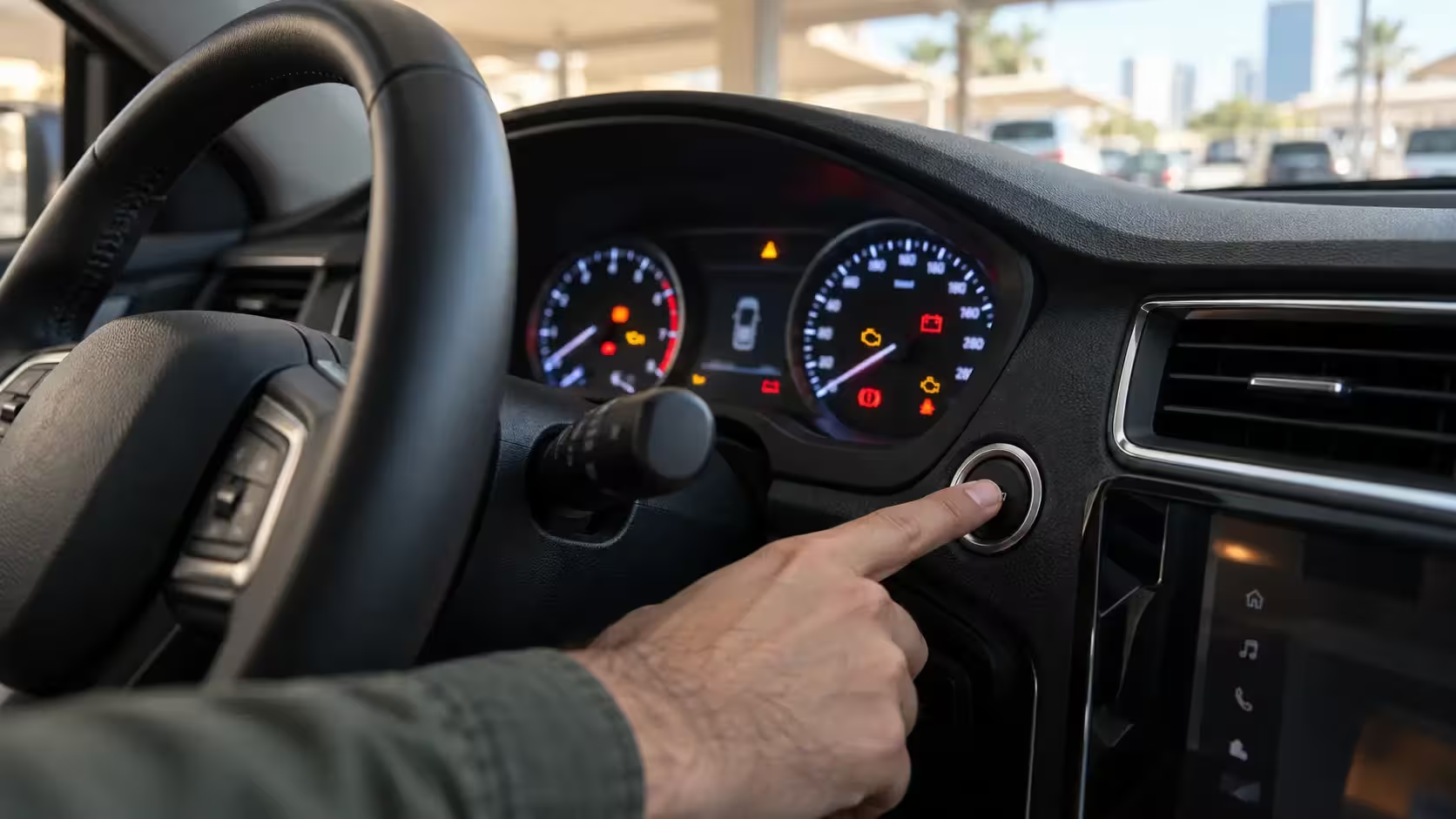
As seen in the image above, when you initiate the start sequence, the dashboard illuminates with multiple warning lights and indicators. This confirms the vehicle's electrical system has power, which is a crucial distinction. Confirm that the selector is fully in Park and that the brake lights operate. Look at the battery terminals for obvious looseness or corrosion without touching damaged components. Verify that there is fuel in the vehicle rather than relying entirely on an uncertain gauge reading. If a jump-start is considered, follow the exact owner’s-manual procedure. Incorrect polarity can damage electronics and create a safety hazard. Do not jump-start a visibly damaged, leaking, or frozen battery, and never connect to high-voltage EV or hybrid components. Some vehicles specify dedicated under-bonnet jump points rather than direct battery access.
When to Stop Trying and Call for Assistance
Knowing when to stop attempting to start the car and call for professional assistance is crucial to prevent further damage or safety risks. Request roadside help if the battery is damaged, the starter produces grinding, the engine cranks abnormally, there is a burning smell, fuel is leaking, or the vehicle repeatedly fails after a jump-start. Repeated cranking can overheat the starter and drain the battery. It can also allow unburned fuel to enter the exhaust on some vehicles. A scan of the engine, body, and security modules may be needed even when no check-engine light remains illuminated. Tell the recovery operator if the vehicle is hybrid, fully electric, or all-wheel drive. The correct recovery procedure protects the drivetrain and high-voltage system.
Preventing Another No-Start Situation
Proactive maintenance is key to avoiding future no-start incidents. Have the 12-volt battery tested when cranking becomes slower, the vehicle needs a jump, or electronic systems begin resetting. Keep the terminals secure and address any charging warning promptly. Avoid leaving accessories operating for long periods with the vehicle switched off. If a car is stored, use a manufacturer-approved maintenance charger when appropriate and keep the smart key far enough away that the vehicle does not remain unnecessarily awake. When a vehicle develops repeated electrical or starting faults despite proper repair, reliability can become part of the ownership decision. Motorists considering a replacement can browse the current Automax® vehicle inventory for new GCC-specification options and confirm warranty details with the team.
Frequently Asked Questions
Conclusion
A car that won't start but has working lights can be a confusing problem, but by systematically diagnosing the symptoms, you can often pinpoint the cause. From a weak battery unable to deliver the necessary current to a faulty starter, immobiliser, or fuel system issue, understanding the nuances of your vehicle's starting process is invaluable. Always prioritize safety, perform only checks you are comfortable with, and do not hesitate to seek professional assistance when in doubt. Regular maintenance and prompt attention to warning signs are your best defense against unexpected no-start situations.