GCC Automotive Market 2026: Key Trends & Future Driving Forces
By Adam Chehayeb
Explore the pivotal trends shaping the GCC automotive industry in 2026, from electrification to smart mobility and increased competition.
Introduction: Navigating the Evolving GCC Automotive Landscape in 2026
The automotive industry across the Gulf Cooperation Council (GCC) region is poised for a transformative year in 2026. Characterized by a confluence of rapid technological innovation, intensifying market competition, and profound shifts in buyer preferences, the market is undergoing an unprecedented evolution. From the steady stream of new vehicle launches and the accelerating embrace of electric mobility to fundamental changes in consumer behavior, several pivotal trends are collectively charting the course for the industry throughout the UAE and the broader Gulf.
This blog post delves into these defining trends, providing a comprehensive overview of what to expect and how these shifts are reshaping the future of driving in one of the world's most dynamic automotive markets. Understanding these forces is crucial for both industry stakeholders and prospective car buyers alike.
A Surge in New Models and Market Competition
One of the most immediate and impactful developments observable in the GCC automotive market is the significant uptick in new vehicle introductions. Global automotive manufacturers are aggressively expediting the rollout of their latest updated models, ensuring that the region receives cutting-edge vehicles swiftly. Concurrently, a wave of new brands, particularly those originating from China, are making an aggressive and strategic entry into the region, expanding their footprint and product offerings at an accelerated pace.
This substantial influx of vehicles has fundamentally altered the competitive landscape. Consumers across the GCC now benefit from an unprecedented array of choices across virtually all segments, ranging from highly accessible entry-level cars to the pinnacle of high-end luxury models. This expanded selection caters to a diverse range of tastes and budgetary considerations.
Simultaneously, this increase in supply has begun to rebalance the market dynamics. Inventory levels are on the rise, and pricing strategies are becoming markedly more competitive as manufacturers and dealers intensify their efforts to attract and secure buyers in a more crowded marketplace. This shift is creating a more buyer-friendly environment, encouraging greater value propositions.
Electrification and Hybrid Growth Accelerate
The drive towards electrification remains a paramount trend profoundly shaping the GCC automotive sector. Automakers are consistently introducing a greater number of hybrid and fully electric vehicles (EVs), adeptly responding to both evolving global environmental regulations and a growing regional demand for more efficient and sustainable mobility solutions. Models such as advanced hybrid SUVs and innovative new electric crossovers are progressively becoming a more common sight on the roads of the UAE and beyond.
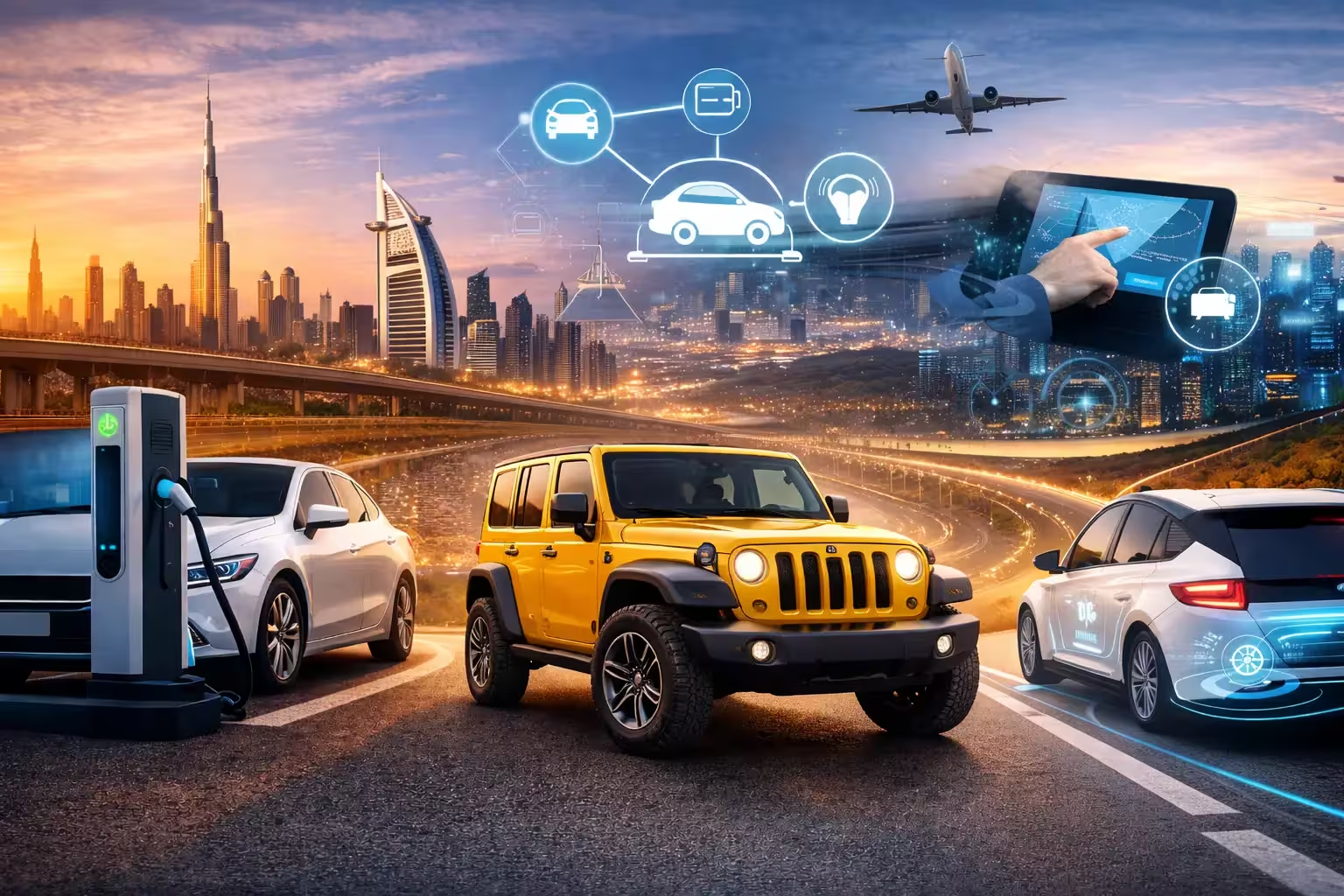
Crucially, the infrastructure required to support this significant transition is also expanding at pace. New EV charging networks are being meticulously developed and deployed across the region, making electric vehicle ownership increasingly practical and convenient. Furthermore, governments and private sector entities continue to make substantial investments in various sustainable mobility initiatives, underscoring a collective commitment to a greener future. The visual of a sleek white electric sedan actively charging at a modern EV station, set against the backdrop of a futuristic cityscape, vividly captures this ongoing shift towards sustainable transportation.
It is important to note that this shift does not signal an immediate decline in the demand for traditional internal combustion engines. Instead, the GCC market is gracefully transitioning towards a mixed landscape, where petrol-powered vehicles, hybrids, and fully electric vehicles are expected to coexist harmoniously for the foreseeable future, offering consumers a wide spectrum of choices to suit their needs.
Luxury Segment Continues to Grow
Despite the broader transformations occurring within the market, the robust demand for luxury vehicles in the GCC remains unequivocally strong. Premium models are consistently attracting increased interest, particularly evident in the UAE, where discerning buyers continue to place a high priority on unparalleled comfort, cutting-edge technology, and the inherent prestige associated with renowned brands. Recent reports indicate a significant growth in demand for vehicles priced above AED 150,000, clearly highlighting a distinct market shift towards higher-value purchases and an appetite for premium experiences.
In response to this sustained demand, manufacturers are meticulously introducing even more advanced features, integrating larger, more immersive displays, and developing enhanced digital ecosystems within their luxury offerings. Modern luxury vehicles are becoming increasingly connected, highly personalized, and are designed with an overarching focus on delivering a holistic and exceptional ownership experience, extending far beyond mere performance metrics.
Technology Becomes a Key Differentiator
At the very core of contemporary automotive innovation lies technology. Modern vehicles are now comprehensively equipped with advanced driver assistance systems (ADAS), expansive digital displays that offer rich visual information, and sophisticated AI-powered interfaces designed to significantly enhance both safety and convenience for occupants. The latest models are introducing groundbreaking features such as augmented reality navigation, advanced hands-free driving systems, and fully digital interiors that redefine the in-car experience.
These technological advancements are no longer exclusive to the luxury segment. Even mid-range models are progressively incorporating sophisticated connectivity and enhanced safety features, positioning technology as a critical and often decisive factor in consumer purchasing decisions across all price points. The image, with its digital overlays illustrating connectivity and vehicle data, alongside a hand interacting with a holographic tablet display against a high-tech city background, perfectly encapsulates this deep integration of technology.
The Rise of Smart Mobility and Autonomous Development
The GCC region is also strategically positioning itself as a pioneering leader in the development and implementation of future mobility solutions. Ambitious initiatives in iconic cities such as Dubai and Abu Dhabi are laser-focused on advancing autonomous driving capabilities, developing sophisticated smart transportation systems, and building next-generation mobility infrastructure. Groundbreaking concepts like driverless ride-hailing services and other advanced transport technologies are not merely theoretical; they are already being rigorously tested and gradually introduced within the region.
This unwavering commitment to innovation is anticipated to fundamentally reshape how people traverse within cities, seamlessly integrating cutting-edge technology into the fabric of everyday transportation. The overall image, depicting a futuristic urban environment bustling with advanced vehicles and digital connectivity, serves as a powerful visual testament to the GCC's ambition to lead in smart mobility and autonomous development.
Changing Market Dynamics and Buyer Behavior
Another significant transformation underway in 2026 relates to the fundamental operational dynamics of the market. The GCC automotive industry has transitioned from a period characterized by supply shortages in previous years to a more balanced, and in some instances, an oversupplied market. This pivotal change is directly influencing pricing strategies, depreciation rates, and, importantly, buyer expectations.
Today's consumers are becoming increasingly informed and selective in their choices, placing a much greater emphasis on overall value, the breadth of features offered, and crucial long-term ownership costs. This heightened consumer awareness is compelling manufacturers and dealers to adapt with remarkable agility, prioritizing efficiency, offering highly competitive pricing, and delivering an exceptional customer experience to stay relevant and successful in this evolving landscape.
Final Thoughts: A Future of Opportunity in GCC Automotive
The GCC automotive market in 2026 is undeniably defined by a spirit of profound transformation. With the twin forces of increased competition and rapid technological advancement driving change, coupled with a decisive shift towards electrification, the industry is evolving in ways that are fundamentally reshaping both the products available and the expectations of consumers. The futuristic cityscape and diverse vehicles in the provided image powerfully symbolize this era of innovation and choice.
For buyers, this dynamic environment creates more opportunities than ever before. An expanded choice of vehicles, access to more advanced technology, and greater overall value are now readily available across all segments of the market. This empowers consumers to select vehicles that perfectly align with their evolving lifestyles and priorities.
At Automax, staying not just abreast but ahead of these critical trends is absolutely essential. Our commitment to understanding how the market is changing enables us to empower buyers to make the most informed decisions, ensuring they gain access to vehicles that truly reflect the exciting future of driving in the vibrant and rapidly developing GCC region.