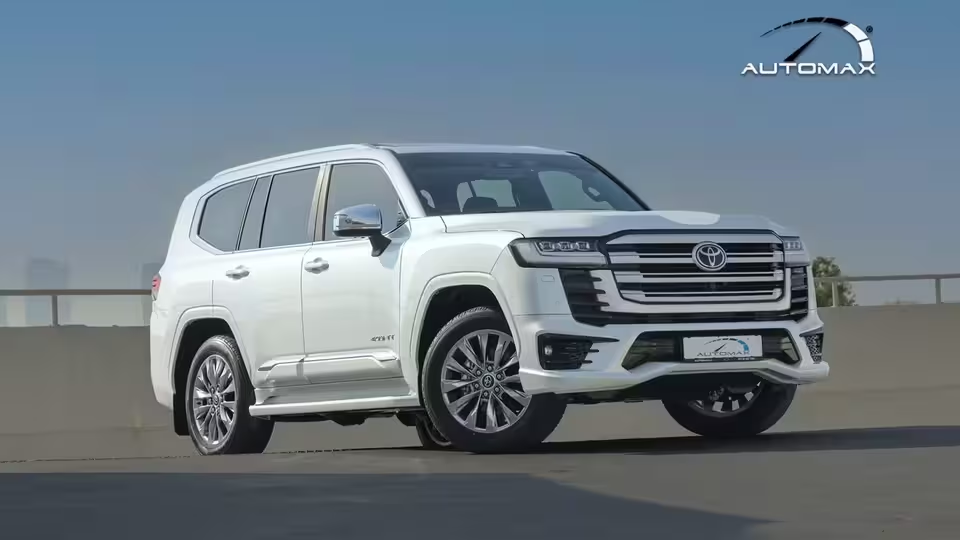
2026 Toyota Land Cruiser Hybrid vs Petrol Buying Guide
By Adam Chehayeb
Deciding on your next 2026 Toyota Land Cruiser LC300 involves a key choice: the potent twin-turbo V6 petrol or the innovative V6 hybrid. Explore performance, efficiency, and ownership factors with Automax®.
Choosing Your 2026 Toyota Land Cruiser LC300: Petrol or Hybrid?
The legendary Toyota Land Cruiser, a beacon of reliability and capability, enters its 2026 model year with an exciting new dimension for buyers. Beyond traditional choices like colour and trim, the full-size LC300 now offers two formidable powertrain options: a twin-turbo V6 petrol engine and a V6 hybrid alternative. This significant development presents buyers with a crucial decision to make when selecting their next premium SUV, directly impacting performance characteristics, fuel efficiency, and overall ownership experience.
For those seeking enhanced torque and electric assistance without the need for external charging, the V6 hybrid powertrain deserves considerable attention. Conversely, the established petrol version remains a highly compelling option for buyers whose performance needs are already met, and who prefer a vehicle without the additional complexities of hybrid components. Ultimately, the right choice hinges on individual driving habits, desired equipment, and the specific support available in the regions where the vehicle will be used. At Automax®, this comprehensive comparison connects directly to our available Land Cruiser stock, including both GXR petrol and VXR hybrid configurations, helping you make an informed decision.
Comparing the Right Land Cruiser Models
This guide specifically focuses on the full-size Land Cruiser 300 series and its 3.5-litre twin-turbo V6 powertrains. It is important to note that the Land Cruiser name encompasses other distinct vehicle series, such as the 70 and 250, which feature entirely different specifications and characteristics. This distinction is crucial, especially when consulting online reviews. A review discussing a four-cylinder Land Cruiser hybrid, for instance, could be describing a different vehicle altogether from the V6 LC300 you are considering. To ensure accuracy, always confirm the series, engine type, model year, and specification region before using any review to inform your purchase decision. Toyota itself elaborates on the different Land Cruiser families in its official LC300 Performance Hybrid announcement.
What Changes with the Hybrid Powertrain?
The LC300 hybrid system ingeniously pairs a twin-turbo V6 petrol engine with an integrated electric motor-generator. This motor is strategically positioned between the engine and a 10-speed automatic transmission, allowing the electric assistance to seamlessly integrate with and enhance the vehicle’s robust drivetrain. Toyota classifies this as a 'performance hybrid,' indicating its primary purpose is to deliver stronger acceleration and increased torque, especially under load conditions. The retention of a 10-speed automatic transmission is a valuable distinction for buyers familiar with the various hybrid arrangements found across Toyota’s broader range. Toyota provides further insights into this design philosophy in its explanation of performance versus efficiency hybrids.
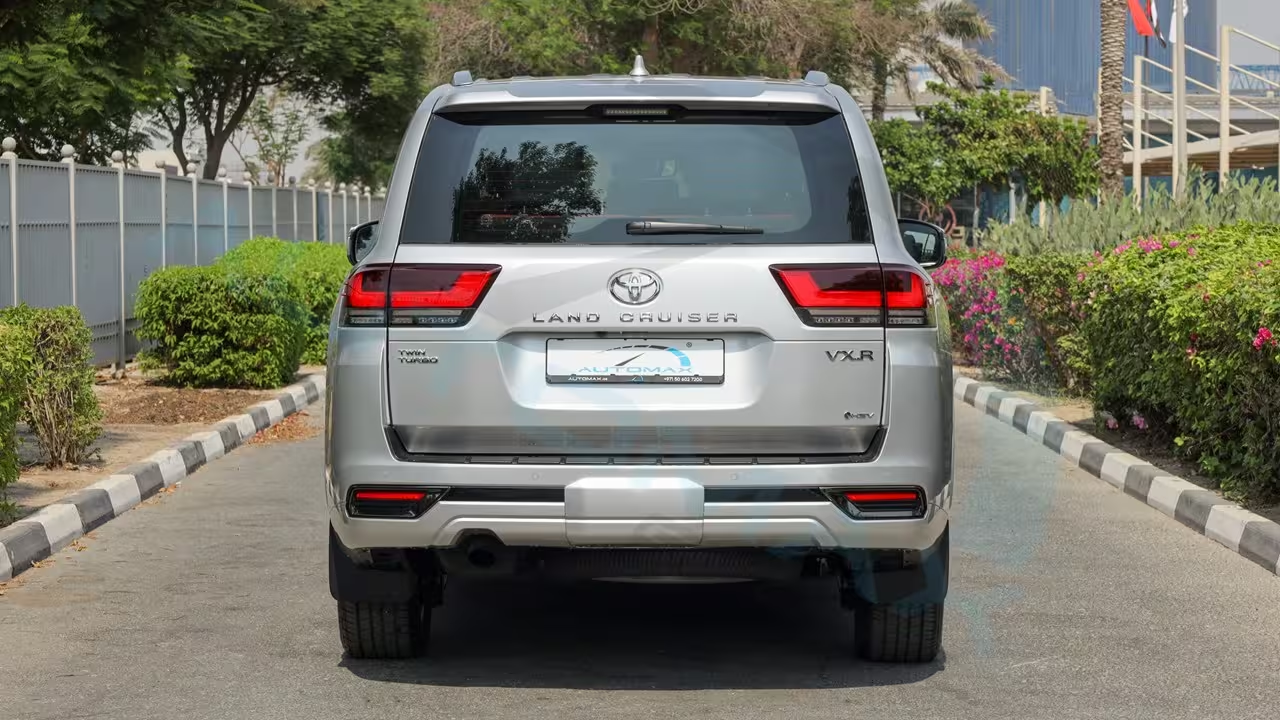
Crucially, the LC300 hybrid does not require external charging. Its high-voltage battery is replenished through two primary methods: energy generated by the engine and regenerative braking, which efficiently recovers some kinetic energy as the vehicle decelerates. You simply continue to refuel with petrol, just as with a conventional vehicle. Toyota’s comprehensive hybrid charging explanation outlines these core principles. For individuals interested in the benefits of electrification but lacking convenient charging access at home or work, this self-charging design makes the ownership routine remarkably straightforward and hassle-free.
Power and Torque Compared: Petrol vs. Hybrid
When it comes to raw power, the differences between the two powertrains become clear. Toyota’s published 2026 GCC specifications rate the 3.5-litre twin-turbo V6 petrol Land Cruiser at an impressive 409 HP and 650 Nm of torque. This version also utilizes a 10-speed automatic transmission and features four-wheel drive as standard. The corresponding V6 hybrid specification, however, elevates these figures, listing a combined system output of 457 HP and a substantial 790 Nm of torque. Like its petrol counterpart, it also employs a 10-speed automatic transmission and four-wheel drive. Toyota officially confirms the hybrid’s headline outputs on its 2026 Land Cruiser Hybrid model page.
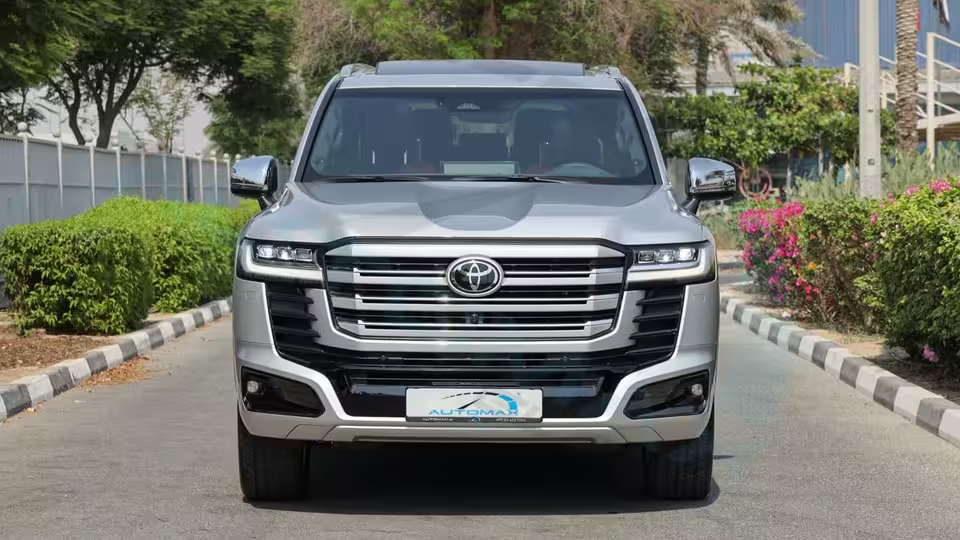
This translates to a significant difference of 48 HP and a notable 140 Nm of additional torque for the hybrid. For buyers who frequently carry multiple passengers and significant luggage, or those who simply desire stronger, more immediate acceleration, this additional torque presents a compelling reason to consider the hybrid. It is important to understand that these hybrid figures represent the combined system output; individual engine and electric motor torque figures should not be simply added together to calculate a different total. Even with the hybrid’s advantage, the petrol version still offers substantial output. A thorough test drive of both models can help you establish whether you would regularly utilize the hybrid’s extra performance or if a different equipment package with the petrol engine might offer greater overall value for your specific needs.
Fuel Consumption and the Annual Difference
Fuel efficiency is another key differentiator. Toyota’s 2026 GCC hybrid specification sheet lists an impressive fuel efficiency of 10.9 km/L. In comparison, its 2026 GCC petrol specification sheet indicates 9.9 km/L for the 3.5-litre twin-turbo V6. When converted into a more commonly understood fuel consumption metric, these figures approximate 9.2 L/100 km for the hybrid and 10.1 L/100 km for the petrol. These provide a reliable regional published reference, though they should not be considered a precise prediction for every vehicle specification or individual driving route.
To illustrate the potential impact, consider covering 20,000 km annually. At these published rates, the hybrid would use approximately 1,835 litres of fuel, while the petrol version would consume around 2,020 litres. This represents a difference of approximately 185 litres over a year, calculated directly from the specification figures. To estimate your annual fuel-cost difference, multiply this quantity by your local petrol price. This figure can then be compared against the difference in actual purchase quotes for the vehicles you are considering. Your actual results will naturally vary based on factors such as traffic conditions, speed, climate, vehicle load, tyre type, and individual driving style. It is also worth noting that the hybrid’s additional performance may hold significant value for you, even if fuel savings alone would take an extended period to offset a potentially higher purchase cost.
Better Economy Does Not Automatically Mean More Range
While the hybrid boasts better fuel efficiency, fuel-tank capacity is an equally important consideration, particularly if your journeys frequently involve long distances between refuelling stations. The same GCC specification sheets reveal a 98-litre tank for the hybrid variant and a larger 110-litre tank for the twin-turbo petrol model. Consequently, the hybrid’s superior published fuel-efficiency figure is accompanied by a smaller fuel tank. Therefore, you cannot simply conclude that the hybrid will travel farther between refuelling stops based solely on its efficiency figure. It is essential to compare both tank capacity and consumption for the exact vehicle you intend to purchase.
For those who regularly undertake long-distance travel, carefully consider your normal routes and the availability of refuelling opportunities. A modest improvement in fuel consumption may hold different significance for someone driving predominantly around town compared to an individual planning extended journeys with a heavily loaded vehicle, where maximum range is a priority.
City Driving and Longer Journeys: Tailoring Your Choice
Urban driving environments offer numerous opportunities for the hybrid’s regenerative braking system to recover energy during repeated slowing and stopping. The hybrid can also operate on electric power alone at low speeds when conditions permit, with its intelligent system seamlessly managing the transitions between its various power sources. Toyota’s LC300 technical announcement specifies electric-only operation below 30 km/h. This capability supports quiet, low-speed running; however, it does not provide the extended electric driving range typically associated with a plug-in hybrid vehicle.
During a test drive, pay close attention to how the vehicle accelerates from a standstill, its responsiveness when merging into faster traffic, and the smoothness of its power source transitions. If possible, drive both the petrol and hybrid versions over similar road conditions to gain a direct comparison. For frequent highway use, your focus should shift to cruising comfort, fuel consumption at your typical travelling speed, and performance with a full complement of passengers. The petrol version may already comfortably meet these needs. The hybrid becomes a more attractive proposition if you value its additional acceleration and torque, alongside any potential efficiency benefits, during sustained highway travel. Importantly, neither version necessitates a charging stop during a journey, offering consistent convenience.
Off-Road Use and Towing Considerations
The presence of a hybrid badge alone does not definitively determine which Land Cruiser is superior for your specific off-road adventures. When assessing suitability for challenging terrain, it is vital to compare the actual tyres, bumper clearance, differential equipment, suspension specification, and terrain assistance systems fitted to each vehicle. These mechanical and electronic details can influence its capability for your preferred routes just as much as, if not more than, the engine choice.
The hybrid’s additional torque is undoubtedly relevant when considering loaded driving or navigating steep inclines, but it does not automatically translate into an increased permitted towing weight or payload capacity. Always adhere strictly to the limits documented for the exact vehicle you intend to purchase, and carefully account for passengers, luggage, accessories, and trailer nose weight where applicable. If towing is a primary reason for your purchase, clearly explain your trailer type and typical load requirements when requesting a quotation. You need a configuration that not only meets these demanding requirements but also aligns with your preferred driving characteristics. For recreational off-road use, it is best to assess the entire vehicle package; an equipment configuration specifically suited to your intended terrain can often be a more valuable purchase than choosing solely based on the highest power figure.
GXR and VXR Equipment Differences
It is crucial to understand that powertrain choice and trim level are often separate decisions, even if the specific vehicles you are considering combine them differently. For example, comparing a GXR petrol model with a VXR hybrid model introduces significant equipment differences in addition to the engine distinction. Therefore, the full change in purchase cost between these two configurations cannot reasonably be attributed solely to the hybrid system.
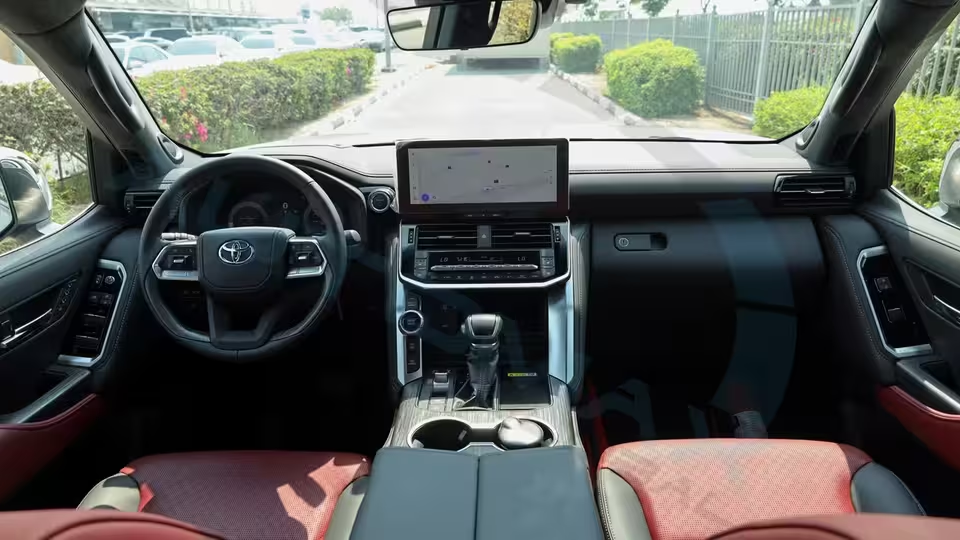
Automax®’s 2026 Land Cruiser GXR petrol listing, for instance, typically includes features such as ventilated front seats, power-adjustable seats, and rear entertainment screens. In contrast, the 2026 Land Cruiser VXR hybrid listing often boasts premium features like a head-up display, seat memory functions, a high-fidelity JBL® sound system, and ventilation for both the first and second rows. To accurately assess value, decide which equipment features you would be willing to pay for independently of the engine choice. This approach makes it easier to judge the overall value proposition of the complete vehicle package.
Seating configuration also requires careful confirmation. Toyota has announced five-seat LC300 hybrids for certain markets, while the cited GCC hybrid specification lists seven seats. Always verify the exact seating layout of the vehicle you intend to reserve, particularly if third-row seating is an essential requirement for your family or usage.
Maintenance and Hybrid Battery Coverage
Even with electric assistance, the hybrid model retains a petrol engine, meaning scheduled engine servicing remains an integral part of ownership. The presence of hybrid components does not negate the necessity of adhering strictly to the vehicle’s prescribed maintenance schedule. It is advisable to request detailed information regarding the service requirements and estimated costs for each configuration over your anticipated ownership period. For the hybrid, specifically inquire about any specified battery inspections and confirm that suitable servicing and diagnostic support are readily available in the regions where you intend to drive the vehicle.
Hybrid battery warranty terms can often differ from the standard coverage for the rest of the vehicle. Toyota’s published warranty information typically illustrates this distinction, but the specific coverage relevant to your purchase must be confirmed for the actual vehicle and its intended destination market. Always request written details of the warranty provider, including time and distance limits, servicing conditions, and the claims process. For an exported vehicle, it is paramount to establish precisely how a warranty claim would be handled locally in the destination country before finalizing your decision. Furthermore, resale value also deserves a local comparison; research the demand for the relevant powertrain and trim in your intended market rather than assuming one version will always retain more value than the other.
Buying a Land Cruiser for Export with Automax®
For buyers considering an export purchase, the first critical step is to accurately identify the vehicle specification before comparing the final cost. This involves confirming the exact model year, engine type, trim level, seating layout, and all included equipment against both the quotation and the detailed vehicle description. It is equally important to inquire how warranty and servicing support will function after delivery in your destination country.
A truly useful cost comparison must account for the vehicle purchase price, shipping costs, necessary documentation, and any applicable destination charges. Always confirm which of these items are included in the quotation provided and which will be payable separately upon arrival. Through Automax® export services, buyers can readily request information on vehicle availability, a comprehensive landed-cost quotation, and expert assistance with all aspects of export documentation and shipping arrangements. Whether you ultimately choose the petrol or hybrid variant, securing the right specification with clear delivery and support arrangements is an essential part of choosing the right vehicle for your needs.
Which Land Cruiser Should You Buy?
The hybrid LC300 is worth prioritising if you desire the stronger combined output, frequently carry a full load of passengers and cargo, and value the benefits of electric assistance without the need to arrange external charging. Its better published fuel efficiency further strengthens its case, particularly when your annual mileage is substantial enough to make the difference in running costs meaningful.
The petrol version, on the other hand, remains an exceptionally strong option if its robust output comfortably meets all your driving needs, you prefer to avoid the additional hybrid hardware, and its specific equipment package offers the better overall purchase for your allocated budget. The most effective approach is to begin by identifying the features and capabilities you genuinely require. Subsequently, compare the actual quotations you receive, estimate your fuel use based on your annual mileage, and meticulously confirm all aspects of after-sales support. This holistic approach will provide you with a far more useful and accurate answer than simply choosing based on the badge alone.
Find Your Land Cruiser at Automax®
Ready to experience the 2026 Toyota Land Cruiser LC300? Explore Automax®’s available vehicle inventory or enquire directly about the linked GXR petrol and VXR hybrid models. Please be aware that stock levels, available colours, and specific specifications can change, so always confirm the exact vehicle details when requesting your quotation. For both GCC purchases and export enquiries, contact Automax® with your preferred engine, equipment, and delivery requirements. Our dedicated team is here to assist you in comparing available options and can help you request the best available offer for your chosen configuration, ensuring you drive away in the perfect Land Cruiser for your adventures.
Frequently Asked Questions
Does the 2026 Land Cruiser hybrid need charging?
No, the LC300 V6 hybrid does not require an external charger. Its system replenishes the battery through the engine and regenerative braking, and you continue to refuel with petrol as usual.
Which version has more torque?
The cited 2026 GCC specifications list 790 Nm for the hybrid system and 650 Nm for the 3.5-litre twin-turbo petrol version, indicating a difference of 140 Nm in favor of the hybrid.
Is the hybrid cheaper to run?
The cited fuel-efficiency figures generally favour the hybrid. However, total running costs also depend on factors such as your annual mileage, local petrol prices, scheduled servicing, insurance costs, and the specific vehicle’s purchase price. We recommend using your own expected mileage and local quotations to accurately compare ownership costs.
Does every Land Cruiser hybrid have seven seats?
Seating configurations for the Land Cruiser hybrid can vary by market and specific configuration. It is essential to confirm the seating layout of the exact vehicle you are purchasing rather than applying a specification from a different market or region.
Can I buy a Land Cruiser through Automax® for export?
Yes, Automax® handles vehicle export enquiries and can provide detailed information on available stock, comprehensive quotations, necessary documentation, and shipping arrangements. Before completing your purchase, always confirm destination requirements and warranty support for your chosen vehicle.