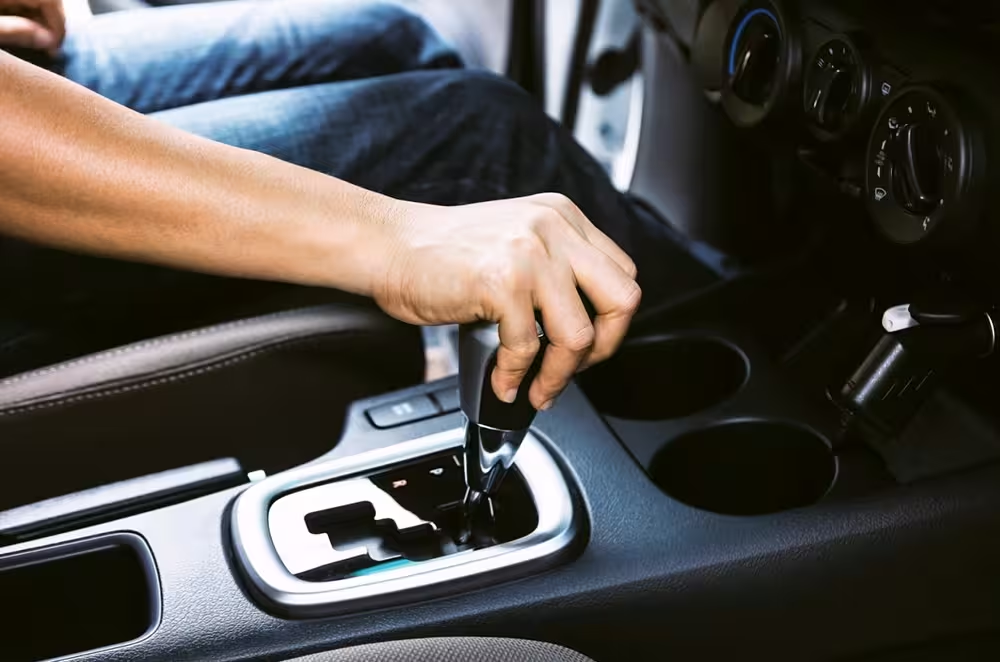
Why My Car Won't Go Into Gear: Common Causes & Expert Solutions
By Adam Chehayeb
When your car refuses to shift gears, it can be an incredibly frustrating and concerning experience. This issue not only disrupts your journey but can also indicate a serious underlying problem with your vehicle's intricate systems.
Introduction
When your car refuses to shift gears, it can be an incredibly frustrating and concerning experience. This issue not only disrupts your journey but can also indicate a serious underlying problem with your vehicle's intricate systems. While many drivers instinctively assume a transmission problem, the reality is that numerous other factors can contribute to a car failing to go into gear. It’s essential to understand these potential causes to properly diagnose and resolve the issue, ideally with the assistance of professionals at a reputable auto service center. This comprehensive article delves into the major reasons why your car won’t go into gear, whether it's an automatic or manual transmission, and provides practical solutions to address these problems, ensuring your vehicle operates smoothly and safely.
1. Transmission Fluid Issues
One of the primary and most common causes of a car not shifting gears effectively is an issue with the transmission fluid. This vital fluid lubricates moving parts, cools the transmission, and transmits power, making its condition crucial for proper gear changes. Problems can arise if the fluid level is either too low or too high. A low fluid level, even with regular maintenance, can indicate a leak that needs immediate attention, leading to insufficient hydraulic pressure for shifting. Conversely, excessive transmission fluid can cause aeration and foaming, leading to gear slippage and inefficient power transfer. Furthermore, dirty or burned fluid can significantly impede smooth gear changes, as its lubricating and cooling properties are compromised, leading to increased friction and heat within the transmission.
Solution:
Regularly check the transmission fluid level using your car’s dipstick. If the level is off, top it up or drain excess fluid as necessary. Beyond the level, assess the fluid by its color, smell, and consistency. Healthy transmission fluid is typically reddish and clear. If it appears blackish, smells burnt, or contains particles, it indicates severe degradation and requires immediate replacement. A professional mechanic can perform a comprehensive transmission fluid flush and refill, addressing any underlying leaks or contamination.
2. Malfunctioning Shift Lock Release
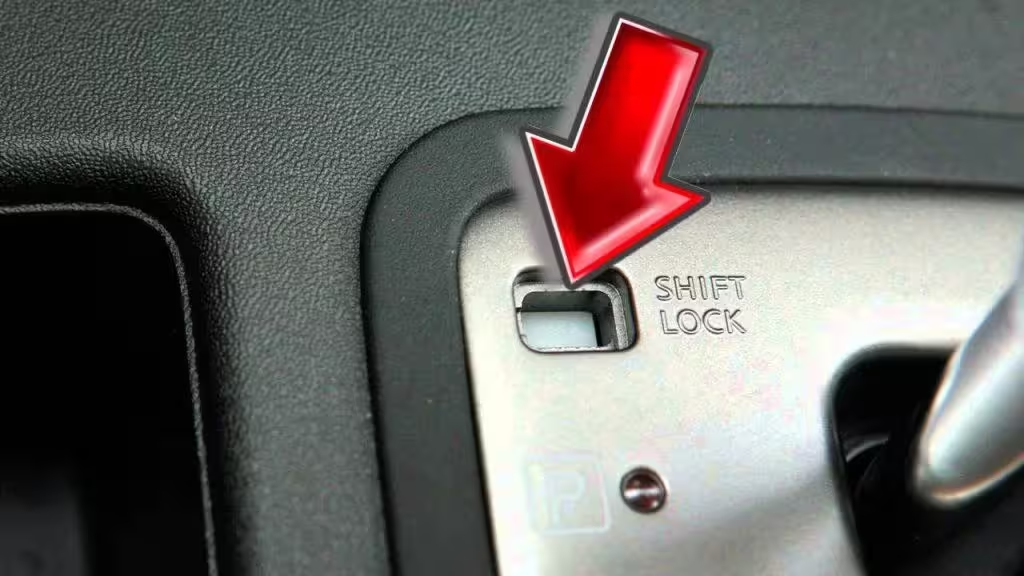
In automatic transmission cars, a critical safety feature is the shift lock mechanism. This system locks the shift knob when the vehicle is in park (P) and prevents it from being moved into another gear unless specific conditions are met: the driver’s foot must be firmly on the brake pedal, and the engine typically needs to be started. Sometimes, however, the shift lock mechanism can malfunction or get stuck, preventing the driver from shifting out of park into drive or reverse, even when all conditions are met. This can be due to a faulty brake light switch, a blown fuse, or an issue with the shift interlock solenoid itself.
Solution:
Most automatic vehicles are equipped with a manual override for the shift lock. As seen in the accompanying image, there is often a small slot or button labeled “SHIFT LOCK” or “SHIFT RELEASE” located near the shifter. This slot is sometimes hidden under a small trim piece, requiring careful removal. To release the lock, insert a key or a small screwdriver into this slot and gently press down while simultaneously attempting to shift into drive or another desired gear. If this temporary bypass works, it confirms an issue with the electronic shift interlock solenoid, which should then be inspected and repaired by a professional. Consult your car’s owner’s manual for specific instructions on bypassing the shift interlock solenoid for your model.
3. Clutch Failure (Manual Transmissions)
For drivers of manual transmission cars, a significant cause of gear shift issues can be clutch failure, often stemming from problems within the hydraulic system. The clutch master cylinder plays a crucial role by translating the mechanical motion of the clutch pedal into hydraulic pressure, which then disengages the clutch, allowing for gear changes. A leak in the hydraulic fluid within the master cylinder or slave cylinder can compromise this system. When fluid leaks, the system loses pressure, causing the clutch pedal to feel soft, spongy, or even stop functioning properly altogether. Without proper clutch engagement and disengagement, the car will struggle or completely fail to go into gear, as the transmission cannot be isolated from the engine effectively.
Solution:
If you suspect clutch failure due to a hydraulic leak, it is imperative to consult a professional mechanic immediately. They can accurately assess the issue, identify the source of the leak (master cylinder, slave cylinder, or hydraulic lines), and replace any worn or faulty components. Ensuring proper clutch operation is vital for both the performance and safety of your manual transmission vehicle. Attempting to drive with a failing clutch can lead to further, more extensive transmission damage.
4. Torn Shift Linkage Wire
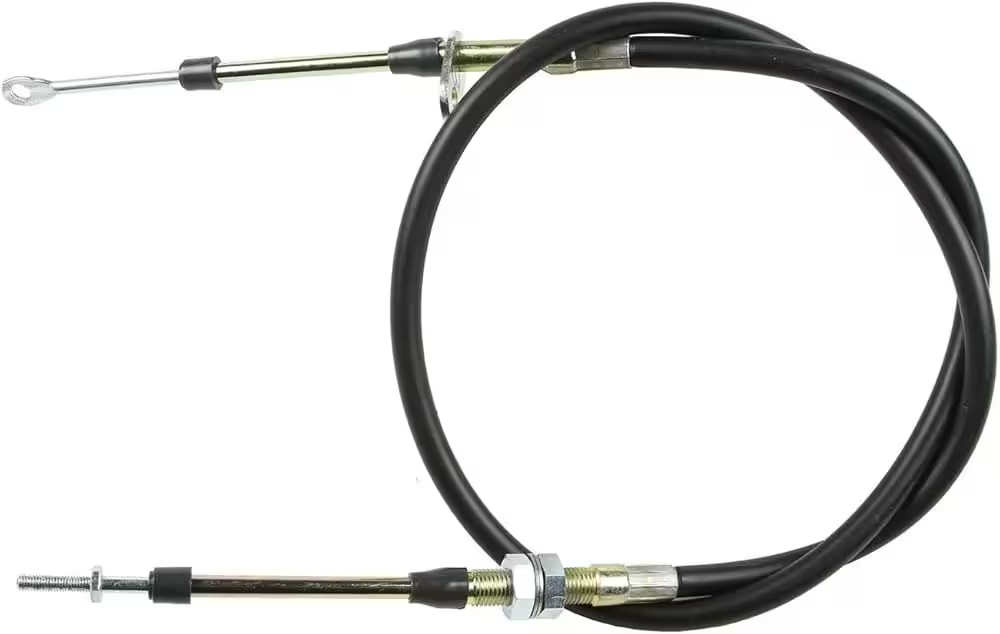
The intricate network of cables and wires in your car is essential for many functions, including gear selection. Over time, these delicate components can suffer wear and tear. Shift linkage cables, which connect your shifter to the transmission, are particularly vulnerable. They can sometimes get pinched, frayed, or even rupture, especially if they rub against sharp metal edges of the car’s frame or engine components due to vibration or improper routing. If the linkage cable to the clutch in a manual transmission, or the shifter to the transmission in an automatic, is broken or severely damaged, the physical connection needed to engage gears is lost, rendering your car unable to go into gear.
Solution:
Visually inspect the linkage cables by carefully tracing them from the shifter mechanism inside the cabin to their connection points on the transmission. Look for any visible signs of wear, fraying, kinks, or complete breakage. As depicted in the image, a healthy shift linkage cable is a robust, flexible component with secure metal end fittings. Ensure all components are securely connected and free from visible wear or damage. In some cases, a loose connection might simply need to be reconnected. However, if the cable is torn or severely damaged, it will require replacement. Due to the precision required for proper gear engagement, it is highly recommended to have your vehicle inspected and repaired by a professional mechanic for accurate diagnosis and replacement of linkage components.
5. Bad Torque Converter (Automatic Transmissions)
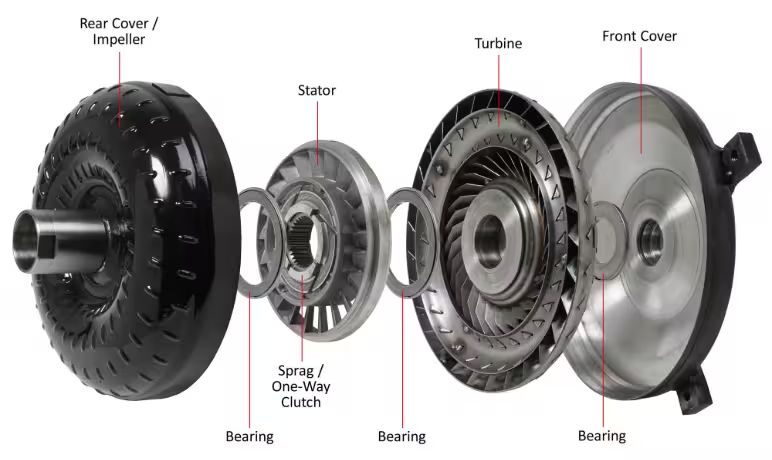
The torque converter is a vital component in automatic transmissions, acting as a fluid coupling that transfers power from the engine to the transmission. It essentially replaces the clutch found in manual transmissions. Inside the torque converter, various internal components such as the pump, stator, and turbine work in harmony to multiply torque and ensure smooth power delivery. If any of these components become faulty due to wear, damage, or fluid contamination, it can lead to significant problems, including slippage when shifting gears, overheating, or even a complete failure to engage gears. Early signs might include shuddering, stalling, or unusual noises. While regular maintenance can sometimes resolve minor issues by ensuring clean fluid and proper cooling, internal component failure often requires more extensive intervention.
Solution:
As illustrated by the exploded view of the torque converter, its internal structure is complex and precision-engineered. Fixing a faulty torque converter is a highly intricate process that typically requires specialized expertise and equipment. It often involves removing the transmission, disassembling the torque converter, replacing specific damaged internal parts, or, more commonly, replacing the entire unit. Given the complexity and critical role of this component, it is strongly advised to have this issue diagnosed and repaired by a certified auto expert or a specialized transmission shop. Attempting DIY repairs on a torque converter can lead to further damage and costly complications.
6. Failed Clutch Packs (Automatic Transmissions)
Within an automatic transmission, clutch packs are instrumental in engaging and disengaging different gear sets, allowing the transmission to shift smoothly through ratios. These packs consist of alternating friction plates and steel plates, which are hydraulically pressed together to transfer power. Over time, these friction materials can wear down, burn out, or warp due to excessive heat or mileage. When clutch packs fail, the transmission loses its ability to effectively engage a specific gear, leading to problems such as transmission slippage, delayed engagement, or complete inability to move the car after coming to a stop. Signs of this issue often include a noticeable delay in acceleration or the engine revving without a corresponding increase in vehicle speed.
Solution:
Addressing failed clutch packs requires the expertise of a skilled mechanic, as it typically involves disassembling the transmission. To ensure optimal performance and longevity, it is crucial to replace both the friction plates and the steel disks within the affected clutch pack. Replacing both components simultaneously helps maintain uniform quality, ensures proper engagement, and prevents uneven wear, which could lead to premature failure of the new parts. This type of repair is a significant undertaking and should only be performed by experienced transmission specialists.
7. Misaligned Gearbox (Manual Transmissions)
Manual transmissions, while robust, are susceptible to misalignment issues that can severely impact their ability to shift gears, potentially leading to complete gear failure. Misalignment can occur due to various factors, including the natural thermal expansion and contraction of components during operation, or even an imbalanced or incorrect transmission fluid that fails to provide adequate lubrication and cooling, leading to excessive wear and altered clearances. When the internal components of the gearbox, such as the input shaft, output shaft, or synchronizers, are not perfectly aligned, the gears cannot mesh properly, making it difficult or impossible to select a gear. This can manifest as grinding noises, difficulty engaging gears, or a complete lockout from certain gears.
Solution:
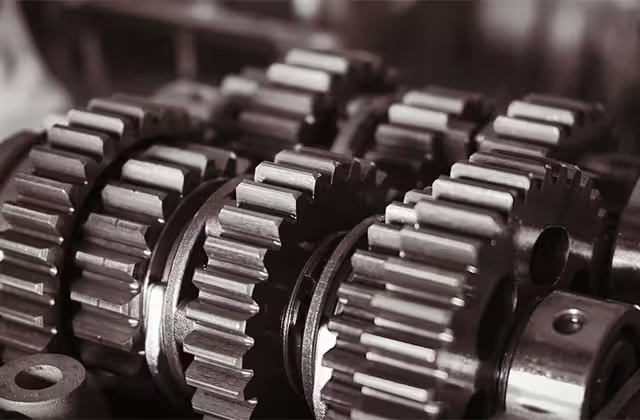
Resolving a misaligned gearbox often requires precise adjustments. In some cases, a slight adjustment to the clutch linkage or the replacement of a worn clutch plate can restore proper alignment and function. However, if the issue stems from internal wear or damage within the gearbox itself, it might necessitate replacing worn-out parts such as synchronizers, bearings, or even shafts. Given the complexity of internal gearbox components, illustrated by the generic image of mechanical parts, it is highly advisable to have a professional mechanic diagnose and address any misalignment issues. They possess the specialized tools and knowledge to accurately identify the root cause and perform the necessary repairs to ensure your manual transmission shifts smoothly.
Frequently Asked Questions
Why does my car jerk when shifting gears in automatic transmission?
An automatic car may jerk when shifting gears due to several reasons, including low or dirty transmission fluid, which affects hydraulic pressure and lubrication. It could also be a sign of slipping clutch packs within the transmission, indicating wear. Less commonly, ignition problems can also cause a car to jerk. It's best to consult a specialist to accurately diagnose and fix these specific problems to prevent further damage.
Why does my car turn off when I switch gears?
If your car shuts off when you switch gears, a primary suspect is a broken or bad torque converter, especially in automatic transmissions. A faulty torque converter can prevent the engine from maintaining enough power at low speeds or idle, causing it to stall when the load changes during a gear shift. This issue requires immediate professional attention.
Why is my automatic transmission not changing gears?
An automatic transmission failing to change gears can be attributed to various issues. Common causes include a malfunctioning engine control module (ECM) that governs shifting logic, bad internal electrical connections, worn-out sensors that provide critical data, or faulty solenoids responsible for directing fluid flow to engage gears. Have your car checked by an experienced mechanic to pinpoint the exact problem.
My car won't move in gear in an automatic transmission. What could be the problem?
If your automatic transmission engages a gear but the car won't move, potential problems include severely worn clutches within the transmission, a stuck transmission gear that isn't fully engaging, or a malfunctioning shift mechanism that isn't properly connecting the power. Regular maintenance and prompt repairs are crucial to help avoid these significant issues and ensure your vehicle remains operational.
Conclusion
When your car won’t go into gear, it can be an incredibly frustrating and potentially dangerous situation. By understanding the common causes, ranging from simple transmission fluid issues and shift lock malfunctions to more complex problems like clutch failure, torn linkage wires, or issues with the torque converter and clutch packs, you can approach the problem with informed insight. Implementing the appropriate solutions, often requiring the specialized skills of an auto professional, is crucial to ensuring that your car’s transmission system operates smoothly and reliably. Regular maintenance and timely car repairs are not just about fixing problems; they are essential for preventing gear shifting issues before they escalate. If you encounter issues beyond repair, it may be worth considering buying a used car in the UAE. For continued insights into car maintenance, different car parts, their functions, and comprehensive repair guides, stay informed by following the UAE’s top auto blog.